
Training
Eccentric Training in Calisthenics: How Negatives Build Strength
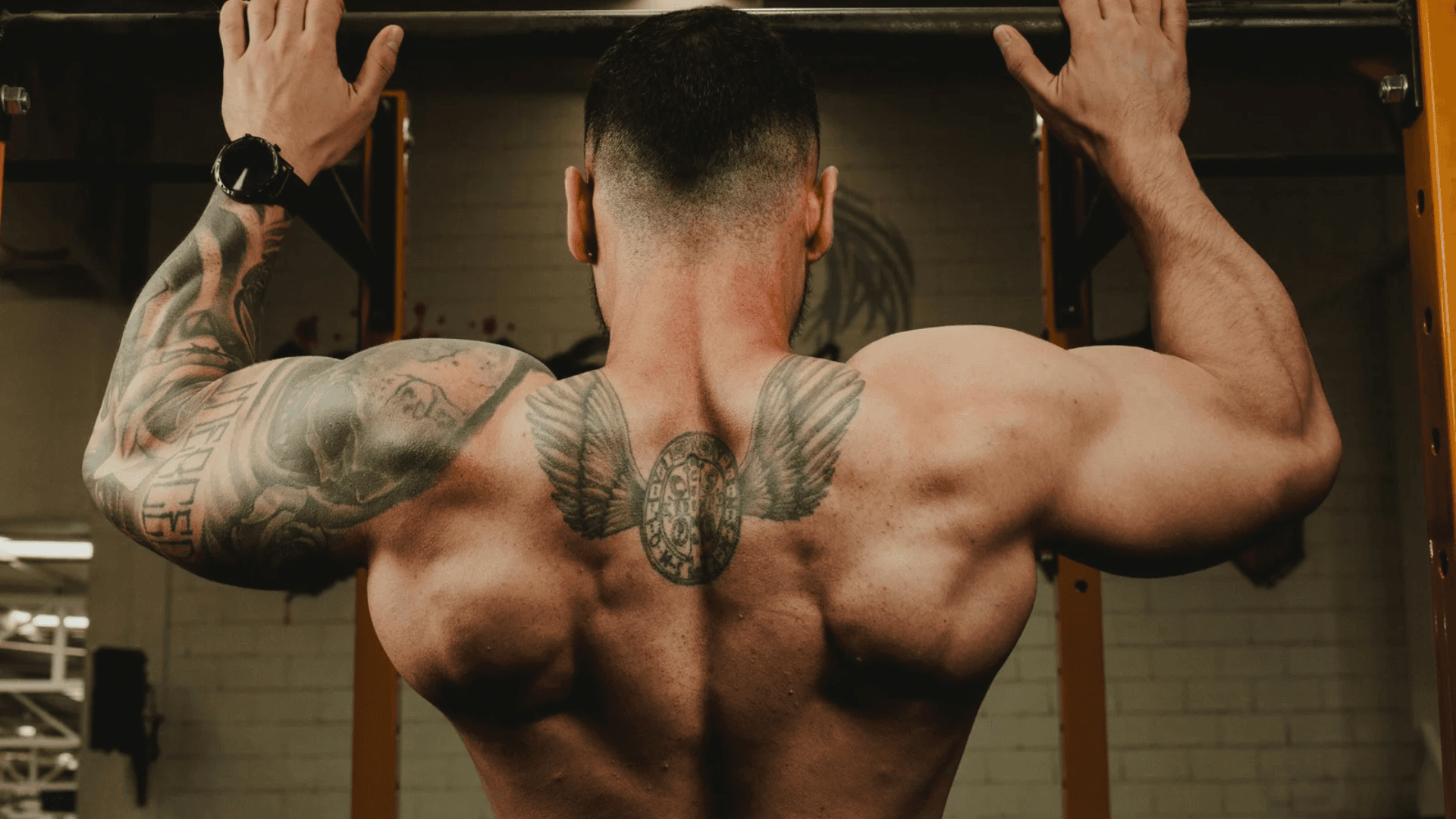
If you have ever worked toward your first pull-up, there is a good chance someone told you to “do negatives.”
Get your chin over the bar.
Then lower yourself as slowly as possible.
That can be useful.
But it also creates a misunderstanding about eccentric training.
Negatives are not a shortcut that lets you skip the rest of the progression.
They are not automatically better because they make you sore.
And moving as slowly as possible is not the goal.
In calisthenics, eccentric work is one tool for building strength in a movement you may not yet be able to perform through the full concentric phase.
Used well, it can help bridge the gap between easier progressions and harder skills.
Used poorly, it can turn into a lot of fatigue with very little quality work.
At MOVE, we use eccentrics when they solve a specific problem.
The goal is not to become good at lowering yourself. The goal is to use the lowering phase to help you become stronger and more controlled through the full movement.
What Is an Eccentric Muscle Action?
A muscle can produce force in several ways.
During a concentric muscle action, the muscle shortens while producing force.
Think about pulling yourself upward during a chin-up.
During an eccentric muscle action, the muscle produces force while lengthening.
That is the lowering phase of the chin-up.
During an isometric action, the muscle produces force without an obvious change in length.
Holding yourself at the top of a chin-up is an example.
All three can appear inside the same repetition.
Take a basic push-up:
- Lowering toward the floor is primarily eccentric for the pressing muscles
- Pausing at the bottom is isometric
- Pressing back up is concentric
Eccentric training simply places more deliberate emphasis on the lowering portion.
Why the Lowering Phase Matters
You are not passive during the way down.
Your muscles are still producing force.
They are controlling how quickly gravity moves your body.
That is why lowering yourself from the top of a pull-up can be possible even when pulling yourself upward is not.
Eccentric muscle actions have some unique mechanical properties. Research consistently shows that muscles can produce high forces during active lengthening, often with a lower metabolic cost than comparable shortening work.
A 2023 review of eccentric muscle mechanics describes eccentric actions as capable of high force production with comparatively lower oxygen consumption and metabolic cost.
That does not mean eccentrics are “free.”
They can still create a lot of local muscular stress and fatigue.
But it helps explain why the lowering phase can be useful when you are not yet strong enough to complete the lifting phase of a movement.
Why Negatives Work Well in Calisthenics
Calisthenics often creates a large jump between progressions.
A row is easier than a pull-up.
An assisted dip is easier than a full dip.
But eventually you have to bridge the space between the easier version and the complete skill.
Eccentrics can help because they allow you to experience more of the real movement under load.
For example, a pull-up negative lets you practice:
- Supporting your full bodyweight
- Grip on the bar
- Shoulder position
- Elbow control
- The actual path of the movement
- Strength through the lowering range
You are not doing a complete pull-up yet.
But you are working much closer to the demands of one than you would be during an easy horizontal row.
That is why negatives are often useful between progressions.
Negative Pull-Ups: A Simple Example
Imagine you cannot perform a strict chin-up yet.
A well-designed progression might already include:
- Ring rows
- Active hangs
- Assisted chin-ups
- Scapular pulling
- Grip work
Once you can control enough of your bodyweight, we may add eccentric chin-ups.
You use a box or assistance to begin at the top.
Then you lower under control.
Maybe the first useful goal is three to five seconds.
Over time, you may become able to:
- Control the same descent more cleanly
- Maintain better shoulder position
- Lower through the full range
- Add repetitions
- Use less help getting into position
- Combine the eccentric with partial concentric work
Eventually, the full chin-up becomes realistic.
The negative did not replace the rest of the program.
It helped connect the pieces.
Negative Dips Work the Same Way
Dips create a similar situation.
Someone may have enough basic pressing strength for push-ups but still struggle to press their full bodyweight out of the bottom of a dip.
An eccentric dip can help introduce more of that demand.
But the prerequisites matter.
Before asking someone to lower their full bodyweight between parallel bars or rings, we want to know that they can:
- Support themselves securely
- Control the shoulders
- Tolerate the range
- Keep the elbows reasonably organized
- Stop the descent instead of simply dropping
If they cannot, a full-bodyweight negative may be too difficult.
We can use:
- Foot assistance
- Bands
- Shallower range
- Parallel bars before rings
- Easier pressing progressions
The fact that you can technically descend does not mean you are ready to train that descent productively.
Eccentric Strength Is Still Specific
One reason we do not present negatives as a shortcut is that strength adaptations are specific to what you train.
Older and newer research on eccentric training shows that eccentric-only work can increase strength, but some of the improvement is specific to eccentric actions.
A systematic review comparing eccentric and concentric resistance training found that eccentric training can produce substantial strength adaptations, particularly when higher eccentric loads are used, but the authors also noted that strength gains can be specific to contraction mode and velocity.
A more recent systematic review and meta-analysis comparing eccentric and concentric training for hypertrophy found no clear overall hypertrophy advantage for eccentric-only training over concentric training.
That is important.
We do not want the takeaway to be:
“Eccentrics are superior, so just do negatives.”
A pull-up still requires you to pull upward.
A dip still requires you to press upward.
The negative is preparation for the full skill, not a replacement for it.
Full-Range Training Still Matters
The end goal for most calisthenics movements is not to become excellent at half of the repetition.
You want to control the entire range.
That means the program eventually needs to develop:
- The lowering phase
- The bottom position
- The change of direction
- The lifting phase
- The full movement under control
This is why eccentric training should usually sit alongside other progression methods.
For a pull-up, that may include assisted full repetitions.
For a dip, it may include foot-assisted or band-assisted reps.
For a Nordic curl, it may include reduced-range or assisted concentric work.
The more of the actual movement you can train with good control, the better.
Our article on progressive overload in calisthenics explains the other variables we can use: leverage, range, repetitions, sets, assistance, tempo, and external load.
Eccentrics are one of those variables.
Tempo Is Not the Same Thing as “Move as Slowly as Possible”
This is where negatives often become unnecessarily dramatic.
Someone hears that slow eccentrics are useful, so every repetition becomes a ten- or fifteen-second struggle.
That is not automatically better.
Tempo is a programming variable.
A coach may prescribe something like:
5-second eccentric
That means the lowering phase should take approximately five seconds.
The goal is usually to create a controlled, repeatable descent.
It is not to turn the exercise into the slowest repetition physically possible.
Research on repetition duration supports this nuance.
A systematic review and meta-analysis on total repetition duration found similar hypertrophy across a fairly broad range of repetition tempos, while extremely slow repetitions did not appear to provide a special advantage.
A newer 2025 systematic review and meta-analysis focused specifically on eccentric phase duration found that longer eccentric durations may offer similar or sometimes greater strength gains under certain conditions, but the overall evidence was mixed and context-dependent.
So when MOVE uses a slow negative, the question is not:
“How slow can we make this?”
It is:
“Does this tempo help you control the position and create the training effect we want?”
Position Matters More Than the Stopwatch
A five-second negative is not automatically a good repetition.
What happened during those five seconds?
Take a pull-up negative.
We care about whether:
- The shoulders stay controlled
- The elbows extend gradually
- The body does not swing excessively
- You maintain the intended path
- The final portion of the descent is still controlled
If you hold the first half for four seconds and then drop through the bottom in half a second, that tells us something.
You may not yet have strength through the entire range.
That is useful information.
We can adjust the progression.
Maybe you need more assistance.
Maybe you need partial-range eccentrics in the weak area.
Maybe your basic pulling strength needs more work.
Maybe we shorten the prescribed descent so you can control all of it.
Control is the goal. The number of seconds is just one way to measure it.
What Does a Good Negative Look Like?
A useful eccentric repetition is generally:
Controlled
You are deciding the speed instead of gravity deciding it for you.
Repeatable
The second and third repetitions still resemble the first one.
Appropriate to the current range
You can control the portion you are training.
Technically recognizable
The movement still looks like the skill you are trying to build.
Challenging but not chaotic
It requires effort, but you are not simply fighting to avoid falling.
This matters because a negative can be technically possible long before it becomes a good training exercise.
When Negatives Are Too Difficult
This happens frequently with beginners.
Someone cannot do a pull-up, so they are told to jump to the top and lower down.
But they cannot really lower.
They stay near the top for a moment and then fall through the rest of the range.
That is not a very useful negative.
The exercise is too difficult.
We need to reduce the demand.
For a pull-up, that could mean:
- Band-assisted eccentrics
- Feet-supported eccentrics
- Shorter-range lowering
- Assisted full repetitions
- More rowing strength first
For dips:
- Feet-supported negatives
- Bands
- Parallel bars instead of rings
- Shallower range
- More basic pressing strength
Calisthenics is scalable.
You do not have to choose between “full negative” and “do nothing.”
Eccentrics Can Create a Lot of Soreness When They Are New
This deserves attention because it is one of the reasons people overestimate eccentric training.
They do negatives for the first time.
They are very sore for three days.
They assume the soreness proves the method is exceptionally effective.
Not necessarily.
Unaccustomed eccentric exercise is particularly well known for producing delayed soreness and temporary reductions in muscle function.
A 2026 review of eccentric exercise and muscle damage emphasizes that eccentric actions can produce high forces and are widely useful for training, but unfamiliar high-intensity eccentric work can also produce considerable muscle damage.
Importantly, the effect changes with exposure.
A 10-week study comparing eccentric and concentric exercise found greater markers of muscle damage after the first eccentric session, but those responses progressively decreased with repeated exposure.
That is the repeated-bout effect.
Your body adapts to the type of work.
So soreness is not the goal.
Adaptation is.
More Soreness Does Not Mean More Progress
This is worth stating directly.
You do not need to destroy a muscle with eccentric work to make it stronger.
The same study mentioned above found that exercise-induced muscle damage was not required for strength gains.
This matters in calisthenics because negatives are easy to overdo.
Three controlled eccentric pull-ups may be useful.
Fifteen maximal negatives when you have never done them before may create so much soreness and fatigue that your next several training sessions are worse.
That is not a better program.
It is just more stress.
Volume Changes the Exercise
One negative is not the same training dose as ten negatives.
And ten three-second negatives are not the same as ten eight-second negatives.
When you program eccentric work, you have to consider:
- Number of repetitions
- Length of the eccentric
- Number of sets
- Range of motion
- Assistance
- Exercise difficulty
- Previous exposure
- Other pulling or pressing work in the week
This is one reason “just do negatives” is not very useful advice.
How many?
How slow?
At what level of assistance?
Through what range?
How often?
What else are you training?
Those decisions matter.
Fatigue Changes the Quality of the Negative
The first repetition may look excellent.
Then the second is faster.
The third loses position.
The fourth becomes a drop.
At that point, adding more repetitions does not necessarily add more of the training effect you wanted.
It may simply add fatigue.
Research comparing training to failure with non-failure resistance training consistently shows that failure training creates greater acute fatigue, muscle damage, and perceived effort.
A systematic review and meta-analysis on acute fatigue found greater reductions in biomechanical performance and greater muscle damage and perceived exertion after training to failure.
That does not mean you can never work hard.
It means fatigue changes what you are capable of repeating.
In eccentric calisthenics work, we often stop a set when the prescribed descent or position is no longer there.
Five ugly seconds are not better than three controlled seconds.
Eccentrics Are Useful for More Than Pull-Ups
Pull-ups are the obvious example, but eccentric work appears throughout calisthenics.
Push-ups
A beginner may lower under control before they can press back up from the floor. We can use the eccentric and then reset from the knees or an elevated position.
Dips
Foot-supported or band-assisted eccentrics can help someone become comfortable with the descent and build strength through the range.
Nordic curls
Many people begin by controlling the lowering phase and using the hands or assistance to return.
Handstand push-up progressions
An athlete may work on controlled eccentric lowering from a higher position before they can press through the full range.
Pistol squats
A controlled descent to a box can build single-leg strength and confidence before the full concentric repetition is available.
Muscle-up transitions
Slowly controlling portions of the transition can be useful, although the movement is more technical and needs to be coached carefully.
The principle is the same.
Use the eccentric to expose the body to a demand it can control but cannot yet reverse completely.
Eccentric Handstand Push-Ups Need More Respect
Some negatives have much higher consequences if control disappears.
A pull-up negative ends in a hang.
A handstand push-up negative ends with your head close to the floor.
That changes how we coach it.
Before using eccentric handstand push-ups, we want appropriate:
- Wrist preparation
- Overhead strength
- Shoulder control
- Inverted confidence
- Range of motion
- Exit strategy
- Equipment setup
Assistance and range can be adjusted.
You might begin with a small eccentric range to pads rather than lowering through a full handstand push-up.
Again, the hardest version is not automatically the best progression.
How Eccentrics Fit With Assisted Full Reps
One of the best ways to think about eccentrics is alongside assistance.
Imagine you are building a chin-up.
You might use:
- Assisted full chin-ups for complete-range practice
- Eccentric chin-ups for heavier lowering exposure
- Rows for additional pulling volume
- Hangs and scapular work for positional strength
Now each exercise has a job.
The assisted repetition lets you practice the complete movement.
The negative gives you more load during the descent.
The row gives you enough volume to build pulling strength.
The hanging work improves the positions around the movement.
That is a progression system.
It is much better than asking one exercise to do everything.
Eccentrics and Full-Range Strength Should Develop Together
The goal is transfer.
If you become excellent at five-second pull-up negatives but your assisted full repetitions never improve, we need to ask why.
Maybe the concentric portion needs more attention.
Maybe the assistance is poorly chosen.
Maybe you need more general pulling strength.
Maybe the bottom range is weak.
Maybe grip is limiting you.
Eccentric improvement is useful when it contributes to the movement you care about.
That is why we keep assessing the complete pattern.
How a Coach Chooses Whether to Use Eccentrics
Eccentrics are not automatically included for every beginner.
At MOVE, a coach might use them when:
- The person can control the movement eccentrically but not concentrically
- There is a manageable gap between two progressions
- A specific range needs more strength
- The athlete needs better positional control
- The exercise can be performed safely under fatigue
- Eccentric volume fits the rest of the training week
We might avoid or reduce them when:
- The person cannot control the descent
- The joints are not prepared for the load
- Soreness is already high
- The person is doing a lot of similar work elsewhere
- The eccentric causes the technique to collapse
- An assisted full-range variation would be more useful
This is the larger point.
Eccentric training is a programming decision, not a rule.
How Eccentrics Fit Into Progressive Overload
Eccentrics also give us another way to progress without changing the entire exercise.
You can progress by:
- Increasing the controlled range
- Extending the eccentric slightly
- Reducing assistance
- Adding a repetition
- Adding a set
- Improving position
- Progressing toward a harder variation
- Combining the eccentric with more concentric range
For example:
Assisted chin-up — 3 x 5
may eventually become:
Assisted chin-up + 3-second eccentric — 3 x 5
then:
Bodyweight eccentric chin-up — 3 x 3
then:
1 full chin-up + 2 eccentric reps
then:
3 full chin-ups
The exact sequence is individual.
But the eccentric helps connect stages.
You can read more about this in Progressive Overload in Calisthenics: How to Keep Getting Stronger Without Adding Weight.
Why MOVE Starts With Fundamentals
Before deciding whether negatives are useful, we need to know what you can already do.
That is one reason every new training member at MOVE starts with Fundamentals.
Fundamentals is a five-session private coaching series designed to establish your starting point before regular training.
The sessions cover:
- Lower-body mechanics, single-leg strength, knees, and hamstrings
- Upper-body pressing
- Rotator cuff work, hanging, and pulling
- Spine, core, and introductory acrobatics
- Barbell technique, plyometrics, and hip flexibility
The goal is not to make you prove you are ready.
It is to see how you move, where your strength is now, how your joints tolerate unfamiliar positions, and which progressions make sense next.
That might include eccentrics.
It might not.
Someone with good pulling strength may be ready for controlled pull-up negatives immediately.
Another person may get more from ring rows and assisted chin-ups first.
Both are still progressing.
Eccentrics Are One Tool Inside a Bigger System
This is the part we want people to understand.
A good calisthenics program may include:
- Full-range repetitions
- Assisted repetitions
- Eccentrics
- Isometric holds
- Easier variations for volume
- Harder variations for strength
- Mobility
- Joint preparation
- External weights
- Skill practice
You do not have to pick one.
The combination changes as you improve.
At MOVE, our group classes combine gymnastics-inspired strength, weight training, calisthenics, and flexibility work, with exercises scaled to the person.
That lets us use an eccentric when it is useful without building an entire training philosophy around the lowering phase.
The Goal Is the Full Skill
Negatives are useful because they let you work on a part of a movement before you can perform all of it.
That is their strength.
But it is also their limitation.
The negative pull-up is not the pull-up.
The negative dip is not the dip.
The eccentric handstand push-up is not the handstand push-up.
Use the lowering phase to build:
- Strength
- Position
- Confidence
- Range
- Control
Then keep moving toward the complete skill.
The best negative is the one that eventually helps you need fewer negatives.
Frequently Asked Questions
What is eccentric training in calisthenics?
Eccentric training in calisthenics emphasizes the lowering phase of an exercise while the working muscles lengthen under tension. Examples include lowering from the top of a pull-up, descending through a dip, or controlling the way down during a Nordic curl.
Are negatives good for building pull-ups?
They can be. Negative pull-ups allow you to train under full bodyweight even before you can pull yourself upward. They usually work best alongside assisted full-range pull-ups, rows, hangs, and other pulling strength work.
How slow should a negative be?
There is no universal ideal tempo. For many beginners, a controlled three- to five-second descent is a practical starting point if the position can be maintained. Longer is not automatically better.
How many negative pull-ups should I do?
The right volume depends on your strength, experience, the duration of each negative, and the rest of your pulling program. A small number of high-quality repetitions is often more useful than continuing until you can no longer control the descent.
Should negatives make me sore?
They can, especially when eccentric training is unfamiliar. Soreness is not required for progress. Excessive soreness may simply mean the training dose was too high for your current exposure.
Are eccentrics better than normal repetitions?
Not generally. Eccentric training has useful properties and can build strength, but full movements require concentric, eccentric, and often isometric strength. Negatives are best viewed as one part of a complete progression.
What if I cannot lower myself slowly during a negative?
The exercise is probably too difficult at its current level. Use more assistance, reduce the range, choose an easier variation, or build more basic strength first.
Can I do negatives every day?
Usually there is no reason to. Eccentric work can create substantial fatigue and soreness, particularly when it is unfamiliar or high intensity. Frequency should be based on the total training program and how well you recover.
Want to Know Which Progression You Should Be Training?
If you are trying to build your first pull-up, dip, handstand push-up, or another calisthenics skill, negatives may be useful.
Or they may not be the thing you need yet.
That is what coaching helps determine.
At MOVE, we start with Fundamentals so we can see your current strength, mobility, body control, and joint readiness before choosing the next progression.
Book a free one-on-one intro with a MOVE coach and we will help you figure out where to start.
Research References
- Hessel AL, et al. Eccentric muscle contractions: from single muscle fibre to whole muscle mechanics. Pflügers Archiv. 2023.
- Roig M, et al. The effects of eccentric versus concentric resistance training on muscle strength and mass in healthy adults: a systematic review with meta-analysis. British Journal of Sports Medicine. 2009.
- Comparison Between Eccentric vs. Concentric Muscle Actions On Hypertrophy: A Systematic Review and Meta-analysis. 2024.
- Amdi CH, King A. The effect of eccentric phase duration on maximal strength, muscle hypertrophy and countermovement jump height: A systematic review and meta-analysis. Journal of Sports Sciences. 2025.
- Schoenfeld BJ, et al. Effect of repetition duration during resistance training on muscle hypertrophy: a systematic review and meta-analysis. Sports Medicine. 2015.
- Eccentric Exercise and Muscle Damage: An Introductory Guide. 2026.
- Damas F, et al. Eccentric exercise per se does not affect muscle damage biomarkers: early and late phase adaptations. European Journal of Applied Physiology. 2021.
- Vieira AF, et al. Effects of Resistance Training to Muscle Failure on Acute Fatigue: A Systematic Review and Meta-Analysis. Sports Medicine. 2022.
- MOVE GST. Programs and Fundamentals.
- MOVE GST. How to Start Calisthenics: What Beginners Should Build First.
Ready to put this into practice?
Book a free intro with a MOVE GST coach — they'll build a plan around you, not a template.
Book Your Free Intro