
Training
Gymnastics Strength Training for Beginners: What Progress Looks Like
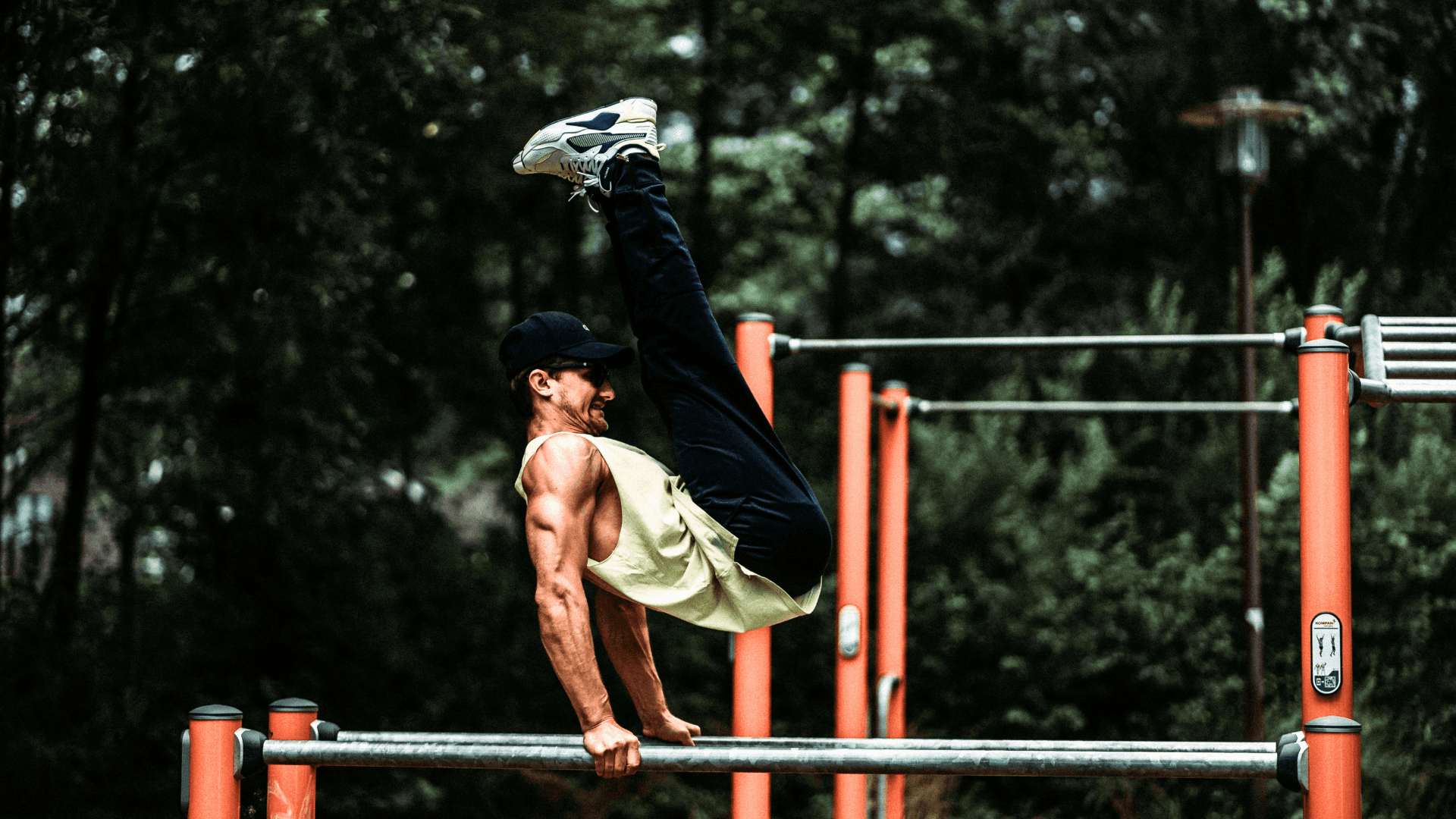
A lot of adults walk into MOVE with the same concern:
"I've never done gymnastics before. Am I too far behind?"
Usually, what they are picturing is someone who has been doing handstands, flips, rings, and splits since childhood. If that is the comparison, of course starting feels intimidating.
But that is not how we look at beginners.
At MOVE, you do not need a gymnastics background to start Gymnastics Strength Training. You need a starting point that matches the body you have now.
Some people arrive with years of weight training but very little mobility. Some are flexible but have never done a pull-up. Some are strong enough to move a lot of weight but have never supported themselves on rings. Others are starting from almost no structured training at all.
Those people will not progress in exactly the same way.
But they all have something in common: the first phase is not about proving that they can do advanced gymnastics skills.
It is about learning how to use their body in ways they have probably never trained before.
When you start with zero gymnastics background, progress often shows up long before your first handstand, muscle-up, or lever.
The First Progress Is Usually Understanding What You Are Doing
This is easy to underestimate.
When someone is brand new to Gymnastics Strength Training, even the language is unfamiliar.
Active hang. Hollow body. Scapular protraction. Support hold. Compression. False grip. Skin the cat.
At first, a coach may give you an instruction and you have to think through every part of it.
Where are my shoulders supposed to be?
Am I bending my elbows?
What does "ribs down" mean?
Why does this position feel completely different when I move my pelvis two inches?
That is normal.
Gymnastics-based training has a large coordination component. You are not only producing force. You are learning positions and learning how to control different parts of the body at the same time.
After a few weeks, those instructions begin to make more sense. You need fewer reminders. You can find the position faster. You start noticing when something feels different before the coach even tells you.
That is progress.
Research on resistance training also helps explain why beginners can improve quickly before they look dramatically different. Early strength gains are influenced heavily by changes in how the nervous system recruits and coordinates muscle. A 2019 study on the first four weeks of strength training found that increases in force were strongly related to changes in motor-unit recruitment and firing behavior.
You are learning how to use what you already have while you are also building more capacity.
Your Body Awareness Starts Changing
Most adults have never been asked to pay close attention to how their shoulder blades move.
Then they start training at MOVE.
Suddenly, they are learning the difference between hanging passively and actively. They are trying to keep the elbows straight while moving the scapula. They are learning to control the ribs and pelvis during a hollow-body position. They are realizing that a handstand is not just "kick up and stay there."
This can feel awkward in the beginning.
That does not mean you are bad at it.
You are learning a new motor skill.
Over time, you begin to recognize positions that were invisible to you before. You feel when your shoulders collapse. You notice when your lower back takes over. You understand why one side feels different from the other.
This improvement in body awareness becomes useful everywhere.
Your rows get cleaner. Your squats become easier to control. Your handstand line starts making more sense. You stop solving every difficult exercise by adding more effort.
A big part of beginner progress is simply becoming more precise.
You Get Stronger Before You Get "Gymnastics Strong"
Someone with zero gymnastics background does not need to begin with a planche progression.
They need enough basic strength to make later progressions productive.
That may mean building:
- Better push-ups
- Stronger rows
- Assisted or full chin-ups
- More controlled squats and single-leg work
- Basic hanging strength
- A stable ring support
- Better core control
These movements may not be the skill you eventually want, but they give you more options.
A person trying to learn a muscle-up will have a much easier time once they have solid pulling and dipping strength.
Someone working toward handstands benefits from enough pressing strength and shoulder control to stay stable overhead.
Someone interested in front levers needs pulling strength and trunk control before longer lever positions make sense.
At MOVE, we work backward from the skill.
What does the skill require?
Which pieces do you already have?
Which pieces are missing?
That is a much better way to measure progress than repeatedly attempting the final movement.
Your Joints Start Learning the Training Too
This is one of the less visible parts of starting Gymnastics Strength Training.
Your muscles may feel ready for more before your wrists, elbows, shoulders, and connective tissues are accustomed to the positions.
Handstands load the wrists in a way most adults rarely experience.
Straight-arm work creates different demands at the elbows and shoulders than regular curls, rows, or presses.
Rings require you to stabilize while producing force.
Deep mobility work exposes joints to ranges you may not have used for years.
That is why the early phase includes joint preparation.
A beginner may spend time on:
- Wrist loading and mobility
- Active and passive hanging
- Rotator cuff strength
- Scapular control
- Shoulder flexion and extension
- Knee and ankle preparation
- Controlled end-range mobility
This work is easy to dismiss if the only thing you care about is getting the final skill as quickly as possible.
But it is part of what makes the final skill trainable.
Our article on what "foundation" really means in Gymnastic Strength Training goes deeper into this idea.
Mobility Progress Can Change Everything
Some beginners discover that strength is not their biggest limitation.
Position is.
Maybe you are strong enough to press overhead, but your shoulders do not comfortably reach the position needed for a clean handstand.
Maybe you have strong legs, but ankle or hip mobility makes a deep squat difficult.
Maybe you can do plenty of core work, but tight hamstrings make compression exercises feel almost impossible.
This is why mobility is not separated from the rest of training at MOVE.
We want useful range of motion that you can control.
For a beginner, progress might be:
- Getting the arms closer to overhead without arching the lower back
- Sitting deeper into a squat with better control
- Reaching farther in a pike while keeping the position active
- Becoming more comfortable in shoulder extension
- Improving hip rotation enough to access a better lower-body position
These changes may not look as exciting on social media as a muscle-up.
But they often make the next six months of training much more productive.
Your First Handstand Progress May Not Be a Handstand
This is where expectations matter.
A beginner often says, "I want to learn a handstand."
Great.
But there are several wins that may come before holding one in the middle of the room.
Your first progress could be:
- Putting your hands on the floor without your wrists feeling uncomfortable
- Getting into a wall handstand confidently
- Holding your shoulders overhead instead of collapsing
- Keeping your body tighter
- Learning how to shift weight through your hands
- Taking one foot away from the wall
- Finding balance for one second instead of zero
Every one of those is part of the skill.
Balance itself is learned through repeated practice. It is not something you unlock because your shoulders became strong enough.
This is why we do not judge handstand progress only by maximum hold time.
Someone can be making very good progress while the final skill still looks inconsistent.
Your First Pull-Up May Take Time — and That Is Fine
Pull-ups are another common benchmark.
Some beginners get one quickly. Others need much longer.
Body weight, training history, grip strength, shoulder control, and current pulling strength all matter.
If you cannot do one yet, progress can still be very clear.
Maybe you move from a heavily assisted chin-up to a lighter band.
Maybe your ring row gets more horizontal.
Maybe your eccentric lowers become slower and more controlled.
Maybe you can finally initiate the pull without shrugging.
Maybe you go from hanging for ten seconds to thirty.
Those are not consolation prizes.
They are the adaptations that eventually produce the pull-up.
The mistake is thinking progress only counts on the day you cross the final threshold.
Rings Feel Unstable Until They Don't
The first time someone uses rings, the reaction is often the same.
"Why are these shaking so much?"
That is because rings remove the fixed path you are used to getting from a machine, bench, bar, or floor.
You have to stabilize the equipment while controlling your own body.
A basic ring support can feel surprisingly difficult even for someone with decent pressing strength.
Then something changes.
The shaking decreases.
Your arms stay closer to your sides.
You can hold the support longer.
Rows feel smoother.
You stop thinking about every tiny correction.
That is skill acquisition happening in real time.
This is also why someone who is strong in a traditional gym can still feel like a beginner on rings. The strength transfers, but the coordination and stability have to be learned.
The First Few Months Can Produce Fast Changes — but Not in Everything
Beginners often improve quickly.
That does not mean every quality moves at the same speed.
Strength may improve noticeably within the first month. Movement quality can change quickly when someone gets good coaching and regular practice. Confidence can improve almost immediately once unfamiliar exercises stop feeling intimidating.
Other qualities may need more time.
Mobility limitations that have developed over years do not always disappear in a few weeks.
Tendons and joints need gradual exposure to new loading.
Complex skills such as freestanding handstands, muscle-ups, levers, deep bridges, and press handstands may require months or years depending on the starting point and training consistency.
That range is normal.
The updated American College of Sports Medicine resistance-training guidance emphasizes something we agree with strongly at MOVE: consistency matters more than making a program unnecessarily complicated, and training should be individualized around the person.
There is no prize for rushing through the beginner stage.
A Realistic Timeline for a Complete Beginner
There is no universal schedule, but it can help to understand what different phases often look like.
The first few weeks
You are learning the environment.
Exercises feel unfamiliar. Your hands and wrists may fatigue quickly. Coaches give you a lot of cues. You are figuring out how the rings, bars, blocks, bands, and other equipment work.
You may already notice better coordination and basic strength.
One to three months
The movements start making more sense.
You recognize common positions and exercises. You need less assistance on some movements. Your hanging tolerance improves. Push-ups, rows, squats, and core exercises feel more controlled.
Your mobility may begin changing in noticeable ways.
You can focus more on improving the exercise because you are no longer spending the whole set figuring out what the exercise is.
Three to six months
You usually have clearer strengths and weaknesses.
Maybe pulling is progressing quickly while handstands need more work. Maybe your mobility is improving, but straight-arm strength is still very new.
You may start reaching meaningful skill milestones: stronger chin-ups, cleaner wall handstands, more stable ring work, deeper mobility positions, or more difficult exercise progressions.
Beyond six months
Training becomes much more individual.
Two people who started together may now be working on very different goals.
One might be learning muscle-ups.
Another may be focused on handstands and flexibility.
Another may be building strength on rings.
Someone else may simply want to keep getting stronger and moving better without chasing advanced skills.
That is exactly how it should work.
You Do Not Need to Be Good at Everything
Gymnastics makes weaknesses obvious.
That can be uncomfortable at first.
You may be strong but stiff.
Flexible but not stable.
Good at pushing but weak at pulling.
Comfortable on the floor but nervous upside down.
That does not mean you are doing poorly.
It gives us information.
At MOVE, we do not expect every member to develop every quality at the same rate. The purpose of coaching is to identify what needs attention and give you an appropriate progression.
You do not need to compare your handstand to the person next to you who has been practicing for five years.
You need to compare your current ability to where you started.
Why MOVE Starts With Fundamentals
This is exactly why every new training member at MOVE begins with our Fundamentals Program.
Fundamentals is a five-session private coaching series, plus two Stretch Series classes, designed to teach the foundational movement patterns and give your coach a clear picture of your starting point before you move into regular training.
That matters more when you have zero gymnastics background.
You are not expected to walk into a group class already knowing how to hang correctly, use rings, control a hollow position, or choose the right progression.
We teach you.
The purpose is not to make beginners "prove themselves" before they can join the gym.
It is to make the transition into training less confusing and more productive.
Once you understand the basic movements, equipment, and positions, our group classes are fully scalable. You can train alongside more experienced members while working on the variation that fits your current ability.
What Good Beginner Progress Looks Like at MOVE
After your first few months, we are not only asking whether you have unlocked an advanced skill.
We are looking for things like:
- You understand the main movement patterns
- You are stronger than when you started
- You can control more of your bodyweight
- Your wrists and shoulders tolerate training better
- Your mobility is improving
- You can hang longer and pull with better control
- Your ring work feels more stable
- You can choose an appropriate progression
- You recover well enough to train consistently
- You are becoming more confident with skills that initially felt intimidating
Then we keep building.
Eventually, those small changes turn into very visible results.
The first chin-up happens.
The wall becomes less necessary in the handstand.
The rings stop shaking.
You reach a mobility position you genuinely could not access when you started.
A movement you used to watch other people do becomes part of your own training.
But none of those moments came from nowhere.
They came from all the less dramatic progress that happened first.
Starting From Zero Is Not a Disadvantage
There is one benefit to coming in with no gymnastics background:
You do not have to unlearn a gymnastics program that was never designed for you.
We can start with your current body, training history, goals, mobility, and strength.
You can learn positions correctly from the beginning.
You can build the joint preparation alongside the strength.
You can progress without feeling like you are supposed to perform at someone else's level.
You are not late.
You are simply at the beginning of a new type of training.
And the beginning is where a lot of the fastest learning happens.
Ready to Start Gymnastics Strength Training as a Beginner?
You do not need a handstand.
You do not need a pull-up.
You do not need to be flexible.
And you definitely do not need a childhood gymnastics background.
At MOVE GST in Clearwater, we work with adults at different starting points and scale the training to the person in front of us.
If you are curious about Gymnastics Strength Training but are not sure whether you are "ready," book a free one-on-one intro with a MOVE coach.
We will talk about your goals, your current training experience, and what the right starting point looks like for you.
Research References
- Del Vecchio A, et al. The increase in muscle force after 4 weeks of strength training is mediated by adaptations in motor unit recruitment and rate coding. The Journal of Physiology. 2019.
- Škarabot J, et al. The knowns and unknowns of neural adaptations to resistance training. European Journal of Applied Physiology. 2021.
- Branscheidt M, et al. Fatigue induces long-lasting detrimental changes in motor-skill learning. eLife. 2019.
- American College of Sports Medicine. Updated Resistance Training Guidelines. 2026.
Ready to put this into practice?
Book a free intro with a MOVE GST coach — they'll build a plan around you, not a template.
Book Your Free Intro