
Training
Isometric Training in Calisthenics: Why Holds Matter
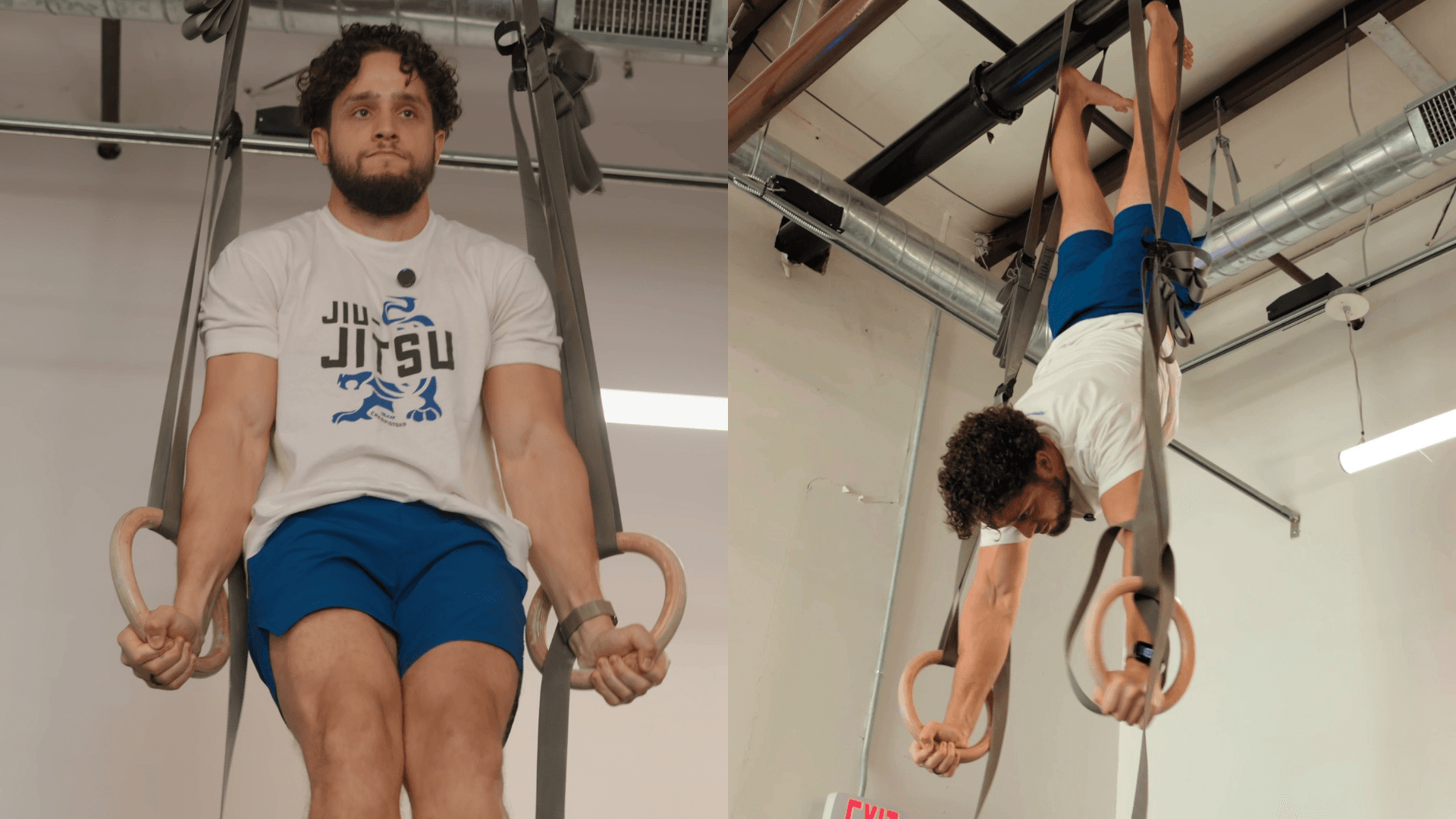
Some of the hardest exercises in calisthenics involve almost no visible movement.
A ring support. An L-sit. A handstand. A front lever progression. A pause halfway through a pull-up.
You are not moving very far, but the muscles are still producing force. The tendons are still transmitting that force. And if the position is difficult enough, a few seconds can feel like a full strength set.
That is isometric training.
In calisthenics, isometrics matter for two main reasons.
First, many skills require you to hold a position against gravity. You need strength that can be expressed without movement.
Second, isometric loading gives us another way to progressively load the muscle-tendon system without repeatedly moving through a joint range.
That can be useful for building capacity, learning positions, and preparing for harder skills.
But holds are not magic. They do not replace full-range strength work, and simply holding something longer is not always the best progression.
A good isometric should build the position, force, and tissue capacity you need for the skill—not just make you shake for as long as possible.
What Is Isometric Training?
An isometric contraction happens when your muscles produce force without obvious movement at the joint.
Think about holding the top of a pull-up. Your elbows are not continuing to bend, but your back, arms, grip, and trunk are still working hard to stop your body from dropping.
The same thing happens in:
- Ring support holds
- L-sits
- Planks
- Wall sits
- Handstands
- Lever progressions
- Planche progressions
- Pauses during pull-ups, dips, or push-ups
In calisthenics, isometric work often appears naturally because many of the skills themselves are static.
But we can also use isometrics deliberately inside dynamic exercises.
A three-second pause at the hardest point of a pull-up is isometric training. So is stopping halfway through a push-up and holding the position before finishing the rep.
Your Muscles Are Not the Only Tissues Adapting
Strength training is usually discussed in terms of muscles.
Did the muscle get stronger? Did it grow? Can it produce more force?
Those things matter.
But muscles do not transfer force directly to the skeleton.
Tendons connect muscle to bone and transmit the force created by the muscle into movement.
If muscular strength improves, the tendon is also exposed to greater forces.
That is why long-term strength development is not only about increasing what the muscles can produce. The connective tissues involved in the movement need time and appropriate loading as well.
A systematic review and meta-analysis on tendon adaptation found that mechanical loading can increase tendon stiffness, material properties, and, to a smaller degree, tendon cross-sectional area.
The same review found that higher localized tendon strain was associated with greater positive changes in tendon stiffness and modulus.
The practical message is straightforward:
Tendons adapt to load too.
And if you want them to tolerate more force, they need progressive exposure to more force.
Why Tendon Capacity Matters in Calisthenics
This becomes important quickly in bodyweight training.
A beginner may build muscular strength relatively fast.
But then they begin adding:
- More pull-ups
- Ring dips
- Handstands
- Straight-arm strength
- Lever training
- Plyometrics
- Longer support holds
The muscles may feel capable of doing more.
The wrists, elbows, shoulders, knees, and surrounding tendon structures may still be adapting to the new amount and type of loading.
That does not mean calisthenics is inherently hard on the joints.
It means the training demand needs to progress at a rate the whole system can tolerate.
This is one of the reasons MOVE does not choose progressions based only on whether someone can complete one difficult repetition.
We also look at whether they can repeat the work, maintain the position, and recover well enough to train it again.
How Isometrics Load the Muscle-Tendon System
During an isometric hold, the joint position stays relatively stable, but the muscle-tendon unit is still under tension.
That makes isometrics useful when we want someone to produce meaningful force in a specific position without performing repeated repetitions through the full joint range.
For example:
- A ring support loads the shoulders, elbows, and surrounding musculature while the athlete learns to stabilize the position.
- A split-squat hold can create substantial lower-body loading without repeatedly moving up and down.
- A mid-range pull-up hold can challenge the back and elbow flexors at a specific joint angle.
- A calf isometric can load the Achilles tendon without repeated ankle movement.
Research in healthy adults supports the idea that repeated isometric loading can change tendon properties over time.
One study using 12 weeks of isometric plantar-flexor strength training reported an increase of roughly 31% in Achilles tendon stiffness following the intervention. (Study)
Older research has also found increases in tendon stiffness alongside improvements in muscle strength after isometric training. (Study)
That does not mean isometric training is uniquely superior for tendons.
Dynamic resistance training also loads tendons effectively.
The important variable is that the tendon experiences enough progressive mechanical loading to adapt.
Isometrics Are Not a Special Tendon Hack
You will sometimes see isometric holds presented as if they are the one exercise type everybody needs for “tendon health.”
The research does not support reducing tendon adaptation to one contraction style.
A large systematic review and meta-analysis of healthy lower-limb tendons found positive tendon adaptations across mechanical-loading programs, with loading intensity and the amount of tendon strain appearing particularly important.
An earlier systematic review of tendon adaptation in healthy adults reached a similar conclusion: tendons respond to chronic mechanical loading, especially when the stimulus is sufficiently demanding.
So the message is not:
“Do isometrics because dynamic training does not strengthen tendons.”
The better message is:
Isometrics are one useful way to load the tendon, especially when the training goal also requires static strength.
That makes them particularly relevant to calisthenics.
Why Static Strength Matters So Much in Calisthenics
A lot of traditional strength exercises are judged by your ability to move through a repetition.
Calisthenics adds another question:
Can you stop in a difficult position and stay there?
That matters in skills like:
- L-sits
- Handstands
- Front levers
- Back levers
- Planche progressions
- Ring supports
- Tuck holds
- Some press-handstand positions
These are not simply dynamic exercises with the movement removed.
The ability to maintain body position against gravity is part of the skill.
A strong pull-up does not automatically give you a strong front lever.
A strong dip does not automatically create a stable ring support.
A good overhead press does not automatically make you comfortable holding a handstand.
Dynamic strength helps.
But the static position still needs to be trained.
Isometric Strength Is Specific to Position
This is another reason isometrics should complement dynamic training rather than replace it.
Strength gained through isometric training has some degree of joint-angle specificity.
If you train very hard at one particular joint angle, the biggest strength improvement tends to occur around that position, although some transfer occurs to nearby ranges.
A recent 2025 systematic review and meta-analysis found that isometric resistance training improved strength, but the pattern of improvement differed from dynamic resistance training.
That makes sense for calisthenics.
If you need to hold a specific lever position, training that position or a closely related progression can be very valuable.
But if your goal is to move through a full pull-up, dip, squat, or press, you still need dynamic work through the range.
Train static strength for static demands. Train movement for movement demands. Use both when the skill requires both.
Ring Supports: A Simple Isometric Example
A ring support is one of the clearest examples of why holds matter.
You may already have decent pressing strength from push-ups or dips.
Then you get on the rings.
Everything shakes.
Your arms drift away from your sides.
The rings turn unpredictably.
The shoulders do not feel stable.
You are not necessarily missing more pressing repetitions.
You are learning how to produce force while stabilizing the entire position.
A basic ring support asks for:
- Shoulder stability
- Elbow control
- Straight-arm strength
- Trunk control
- Grip
- Positional awareness
At first, a five-second hold may be difficult.
Then ten seconds becomes manageable.
Then the position gets cleaner.
Eventually, you may work toward longer holds, turned-out positions, or more advanced ring strength.
The isometric is both strength training and skill practice.
L-Sit Progressions Need Static Strength Too
The L-sit looks simple when someone is good at it.
They support themselves on their hands and hold the legs straight in front.
But the position asks for several things at once:
- Straight-arm support strength
- Shoulder depression
- Trunk control
- Hip-flexor strength
- Compression
- Hamstring flexibility
- Knee extension
- Grip or hand support
A beginner might start with:
- Feet-assisted support
- Tuck support
- One-leg extensions
- Short tuck L-sit holds
- Full L-sit attempts
The hold time may increase.
But that is not the only progression.
You can also increase leverage by straightening the legs.
You can reduce assistance.
You can improve shoulder position.
You can increase the height of the legs.
You can move from stable parallel bars to rings.
Progression changes the intensity of the hold, not just the clock.
Handstands Are Isometric Too—But Balance Changes the Problem
A handstand is a static position, but it is not a completely motionless exercise.
Small corrections are happening constantly through the fingers, wrists, shoulders, and body line.
Still, there is a large isometric strength component.
You need to maintain:
- Elbow extension
- Shoulder elevation
- Overhead position
- Trunk tension
- Hip and leg position
For beginners, strength is not always the main limiter.
Balance usually matters more.
But enough isometric strength and joint tolerance are still necessary to practice the skill frequently without the position collapsing immediately.
That is why MOVE does not treat handstand practice as “just balance” or “just strength.”
The qualities develop together.
Paused Pull-Ups Build Strength in Specific Positions
Isometrics do not have to be separate hold exercises.
You can put them inside full-range movements.
For example:
Perform a pull-up.
Pause for two seconds near the top.
Lower halfway.
Pause again.
Then finish the eccentric.
Now the exercise still includes dynamic pulling, but you are also increasing time under tension at specific positions.
This can be useful when someone has a clear sticking point.
Maybe they are strong from the bottom but lose position near the top.
A pause gives them more exposure to that range.
The same idea can be used with:
- Push-ups
- Dips
- Rows
- Squats
- Split squats
- Calf raises
The hold supports the full movement rather than replacing it.
Progressive Loading Matters More Than Simply Holding Longer
This is one of the biggest mistakes people make with isometrics.
They assume progress always means adding seconds.
Ten seconds.
Then twenty.
Then thirty.
Then one minute.
That can build endurance.
But if the goal is strength, eventually you may need a harder position rather than a much longer hold.
Imagine you can hold a basic ring support for 30 seconds comfortably.
Taking that same hold to 60 seconds may improve endurance.
But a harder progression might involve:
- Turning the rings out
- Improving elbow lockout
- Increasing instability
- Adding external load
- Moving toward a more demanding straight-arm position
The same thing applies to an L-sit.
If a tuck hold becomes easy, the next step may not be a two-minute tuck.
It may be extending one or both legs.
For strength, progressive overload matters more than collecting longer and longer hold times.
How Coaches Progress Isometric Difficulty
A coach has several variables available.
Leverage
Longer lever positions create more torque.
A tuck front lever is easier than an advanced tuck.
An advanced tuck is easier than a straddle or full lever.
Assistance
Bands, feet, boxes, or partner assistance can reduce how much force you have to produce.
Over time, assistance can be reduced.
Joint angle
A hold can be performed in a more or less demanding position.
A pull-up hold near the top may feel very different from one closer to the bottom.
External load
Once a position is strong, weight can be added.
Hold duration
Time is still useful, especially while establishing basic capacity.
Total volume
Three five-second holds create a different training dose from six ten-second holds.
Position quality
A cleaner position may be a meaningful progression even before intensity changes.
This is why there is no universal rule that says “hold every isometric for 30 seconds.”
The dose depends on the goal.
A Harder Hold Is Only Better If You Can Control It
This is the same rule we use for dynamic calisthenics progressions.
Harder is not automatically better.
Imagine someone can hold a clean tuck front lever for ten seconds.
They move to an advanced tuck and immediately lose scapular position, drop the hips, and hold for two seconds.
Technically, the second variation is harder.
That does not automatically make it the better training exercise.
The current progression should be difficult enough to require adaptation but manageable enough to accumulate useful work.
Sometimes that means:
- Staying on the same progression
- Adding another set
- Cleaning up the position
- Extending the hold slightly
- Using a small amount of assistance on the harder version
That is still progression.
Tendons Respond to Load Over Time
Tendon adaptation is slower and less obvious than adding a repetition to a pull-up.
You cannot look at your elbow after a month and see that the tendon has become better prepared.
But chronic mechanical loading can change tendon stiffness, material properties, and structure.
A 2022 systematic review and meta-analysis found moderate increases in tendon stiffness, large increases in tendon modulus, and smaller increases in cross-sectional area after mechanical-loading interventions.
Importantly, the studies that produced greater localized tendon strain tended to produce greater changes.
This is another reason progression matters.
The tendon needs enough stimulus to adapt.
But jumping abruptly to a dramatically harder hold or much higher weekly volume can exceed current tolerance.
The best approach is gradual exposure.
Muscle Strength and Tendon Capacity Need to Progress Together
This matters because muscle strength can improve quickly.
Someone starts calisthenics.
Their pull-ups improve.
They feel stronger.
So they add more volume.
Then they add weighted pull-ups.
Then lever work.
Then ring training.
Their muscular ability may allow them to generate more force before the surrounding tissues are accustomed to that amount of work.
Research on muscle-tendon adaptation has raised exactly this issue: muscles and tendons do not always adapt at the same rate, which can create periods where force-producing capacity rises faster than tendon mechanical properties.
That does not mean you should be afraid of progressing.
It means progression should include enough time and volume for the entire system to adapt.
Our article on progressive overload in calisthenics explains how we manipulate leverage, range, volume, assistance, tempo, and difficulty without increasing everything at once.
Isometrics Can Reduce Repeated Joint Movement—But the Joint Is Still Loaded
A useful feature of isometric work is that you can create substantial muscular and tendon force without repeatedly moving the joint through flexion and extension.
That can be useful in certain phases of training.
For example, a static split-squat hold creates lower-body loading without repeated knee movement.
A pull-up hold loads the elbow flexors and surrounding tendon structures without repeated repetitions.
But this does not mean the joint is unloaded.
The tissues are still experiencing force.
So isometric training should not be treated as automatically “easy on the joints.”
A difficult hold can be extremely demanding.
The benefit is simply that the loading occurs with less joint excursion.
Intensity, leverage, volume, and recovery still matter.
Isometrics Are Not a Replacement for Dynamic Exercises
This is probably the most important programming point.
A calisthenics program made entirely of holds would leave major gaps.
Dynamic exercises develop strength through changing joint angles.
They expose the muscle-tendon system to force through range.
They build concentric and eccentric strength.
They teach you to coordinate transitions between positions.
And most real movement is dynamic.
A strong program might use:
- Pull-ups and pull-up holds
- Dips and ring supports
- Squats and split-squat holds
- Pike compression repetitions and L-sits
- Handstand practice and dynamic overhead strength
- Lever holds and rows or straight-arm pulling drills
The static work adds something useful.
It does not replace the movement.
Isometric Strength Does Not Automatically Transfer Everywhere
This is where specificity matters again.
A person who becomes very good at holding a 90-degree elbow position has become stronger in and around that position.
That does not guarantee the same improvement through the entire range of a pull-up.
A 2025 systematic review examining dynamic training and isometric strength reinforced the broader principle of resistance-training specificity: strength adaptations transfer, but they are influenced by movement pattern, contraction type, range, and the test being used.
This is why MOVE does not build programs around one training method.
We combine methods based on what the goal requires.
How Long Should You Hold an Isometric?
There is no universal answer.
A very difficult front-lever progression may be trained in relatively short holds.
A basic support position may use longer holds.
A tendon-loading isometric may use a different duration again.
The right hold time depends on:
- Intensity
- Exercise
- Goal
- Training age
- Joint position
- Number of sets
- Weekly volume
- How well the position is maintained
For calisthenics strength work, we usually care more about whether the hold is challenging and repeatable than whether it reaches a specific arbitrary duration.
If ten seconds is technically strong and difficult, that can be plenty.
If thirty seconds is easy, it may be time to progress the position rather than simply keep adding time.
How Much Isometric Volume Is Enough?
Again, more is not automatically better.
Holding a position creates fatigue.
As fatigue increases:
- The shoulders may change position
- The elbows may soften
- The hips may drop
- The lever gets shorter
- The spine compensates
- The hold starts becoming a different exercise
Once that happens, the extra seconds are not necessarily giving you more of the training effect you wanted.
A practical approach is to accumulate several high-quality holds rather than one extremely long hold that falls apart.
For example:
4 x 8-second tuck front lever
may be more useful for strength and position than:
1 x 30-second hold
if the second half of the long hold is technically poor.
The exact prescription depends on the athlete.
Static Holds Should Still Be Progressively Overloaded
Isometric work follows the same progression rules as the rest of strength training.
Progress might mean:
- Longer holds
- More sets
- Better position
- Longer leverage
- Less assistance
- More external load
- A more difficult joint angle
- A harder equipment setup
You do not need all of those at once.
In fact, changing too many at the same time makes progression harder to manage.
A coach might keep the hold duration the same while changing leverage.
Or keep the leverage the same while adding total volume.
That lets us see how the body responds.
Isometrics Can Be Useful When Learning Straight-Arm Strength
Straight-arm calisthenics skills depend heavily on isometric strength.
Think about:
- Front levers
- Back levers
- Planche progressions
- Ring support variations
The elbows remain extended while the shoulders and trunk produce force to maintain the position.
For someone new to this style of loading, that is a different demand from normal bent-arm pulling or pressing.
A strong chin-up helps.
A strong row helps.
But neither completely replaces specific straight-arm preparation.
This is where static progressions become useful.
The leverage can be shortened.
The hold can be assisted.
The volume can be kept low initially.
Then the demand builds over time.
What About Isometrics for Tendon Pain?
Isometric exercises are often used in rehabilitation settings, especially for tendon pain.
But they should not be presented as a universal pain-relief method.
Research on tendinopathy has become much more nuanced, and current reviews emphasize structured progressive loading rather than one contraction type as the answer for everyone.
A recent systematic review and meta-analysis of patellar tendinopathy loading strategies concluded that structured tendon-loading exercise remains central to rehabilitation, while the evidence does not establish one loading method as universally superior.
If you have persistent tendon pain, the goal is not to find a random isometric from social media.
The load, diagnosis, irritability, training history, and overall program matter.
Pain that is persistent, worsening, or affecting normal activity should be assessed by an appropriate healthcare professional.
How MOVE Uses Isometric Training
At MOVE, isometrics show up naturally inside gymnastics-inspired strength training.
You may see:
- Ring supports
- L-sit progressions
- Handstand holds
- Lever progressions
- Paused pull-ups
- Paused rows
- Paused push-ups
- Split-squat holds
- End-range mobility holds
- Straight-arm strength positions
But the exercise is chosen for the goal.
We are not adding holds simply because isometric training sounds advanced.
If dynamic strength is the missing quality, we train dynamic strength.
If someone needs more positional control, we may use a hold.
If a tendon needs progressive loading, we look at the total loading plan rather than assuming one isometric exercise solves it.
That is also how our group classes are structured: gymnastics-inspired strength, weight training, calisthenics, flexibility work, and progressive skill development are combined rather than separated into competing methods.
Why MOVE Starts With Fundamentals
Before choosing the right hold, leverage, or training volume, we need to know where you are starting.
Every new training member at MOVE begins with Fundamentals.
MOVE currently describes Fundamentals as a five-session private coaching series designed to establish bodyweight control, joint mobility, movement patterns, and positional awareness before more load and intensity are layered on. (MOVE Programs)
That is particularly useful for isometric work.
A ten-second ring support may be a basic starting exercise for one person.
For someone else, it may already be a high-intensity straight-arm hold.
A wall handstand may be easy for one member and demanding for another person's wrists and shoulders.
A tuck L-sit may be appropriate immediately, or we may need feet-assisted support first.
We establish the baseline, then scale the hold.
Fundamentals is not about proving you are strong enough to start.
It is where we decide what “starting” should look like for you.
Holds Matter Because They Have a Job
Isometric training is useful in calisthenics because calisthenics asks you to do more than move your body.
Sometimes you need to stop it.
You need to:
- Stabilize on rings
- Support yourself on straight arms
- Hold your legs in an L-sit
- Maintain an overhead handstand position
- Pause at a weak point in a pull-up
- Create enough force to hold a lever against gravity
Those are real strength demands.
And because the muscle-tendon system is still under load, well-programmed isometrics can also contribute to the progressive mechanical loading that tendons need to adapt over time.
But the best program still uses both static and dynamic work.
Holds help you build strength in the positions you need. Full-range training teaches you to move through them. Calisthenics needs both.
Frequently Asked Questions
What is isometric training in calisthenics?
Isometric training involves producing muscular force while holding a position without substantial joint movement. Common calisthenics examples include L-sits, ring supports, handstands, front-lever holds, planche progressions, and pauses during pull-ups or push-ups.
Are isometric holds good for tendons?
Isometric exercise can load the muscle-tendon system and contribute to tendon adaptation when the loading is sufficiently challenging and progressed over time. However, isometrics are not uniquely superior to other resistance-training methods for tendon adaptation.
How long should I hold an isometric?
It depends on the exercise and goal. Hard calisthenics strength holds may use relatively short durations, while lower-intensity positions can be held longer. Position quality, intensity, total volume, and progression matter more than reaching one universal number of seconds.
Are longer holds always better?
No. Longer holds increase time under tension and can improve endurance, but strength progression may eventually require harder leverage, less assistance, more load, or a more difficult position rather than simply adding more seconds.
Can isometrics build strength?
Yes. Research shows that isometric resistance training can improve muscular strength. The gains are partly specific to the joint angles and contraction type being trained, which is why dynamic strength work should usually remain part of the program.
Can isometrics replace pull-ups, dips, and other full-range exercises?
No. Isometrics develop static strength and positional control, while dynamic exercises build strength through changing joint angles and train concentric and eccentric muscle actions. They work best together.
What are the best isometrics for calisthenics beginners?
The right exercise depends on the person, but examples may include basic support holds, active hangs, assisted L-sit positions, wall handstands, pauses in rows or push-ups, and simple lower-body holds. The position should be scaled so it can be controlled.
How do I make an isometric exercise harder?
You can increase leverage, reduce assistance, increase external load, change the joint angle, improve the position, add sets, or increase hold duration. You do not need to progress every variable at the same time.
Want to Know Which Holds You Should Be Training?
A static hold is only useful if it matches the strength, position, and skill you are trying to build.
At MOVE, we start with Fundamentals so we can see how your strength, mobility, body control, and joint tolerance fit together before choosing the next progression.
If you are interested in calisthenics, handstands, rings, lever training, or simply building stronger joints and better body control, book a free one-on-one intro with a MOVE coach.
We will help you find the right starting point and build from there.
Research References
- Lazarczuk SL, et al. Mechanical, Material and Morphological Adaptations of Healthy Lower Limb Tendons to Mechanical Loading: A Systematic Review and Meta-Analysis. Sports Medicine. 2022.
- Bohm S, et al. Human tendon adaptation in response to mechanical loading: a systematic review and meta-analysis of exercise intervention studies on healthy adults. Sports Medicine - Open.
- Bohm S, et al. Human Achilles tendon plasticity in response to cyclic strain: effect of rate and duration. Journal of Experimental Biology. 2014.
- Wiesinger HP, et al. Substantial Achilles adaptation following strength training has no impact on tendon function during walking. PLOS ONE. 2021.
- Kubo K, et al. Effects of isometric training on the elasticity of human tendon structures in vivo. Journal of Applied Physiology. 2001.
- Ghayomzadeh M, et al. Effects of isometric vs. dynamic resistance training on isometric and isokinetic muscular strength: A systematic review with meta-analysis. Journal of Science and Medicine in Sport. 2025.
- Task Specificity of Dynamic Resistance Training and Its Transferability to Non-trained Isometric Muscle Strength: A Systematic Review with Meta-analysis. 2025.
- Exercise Loading Strategies for Patellar Tendinopathy: A Systematic Review and Meta-Analysis of Clinical Outcomes. 2026.
- MOVE GST. Programs.
- MOVE GST. Group Classes.
- MOVE GST. Progressive Overload in Calisthenics.
Ready to put this into practice?
Book a free intro with a MOVE GST coach — they'll build a plan around you, not a template.
Book Your Free Intro