
Training
Scapular Control in Calisthenics: Why It Matters
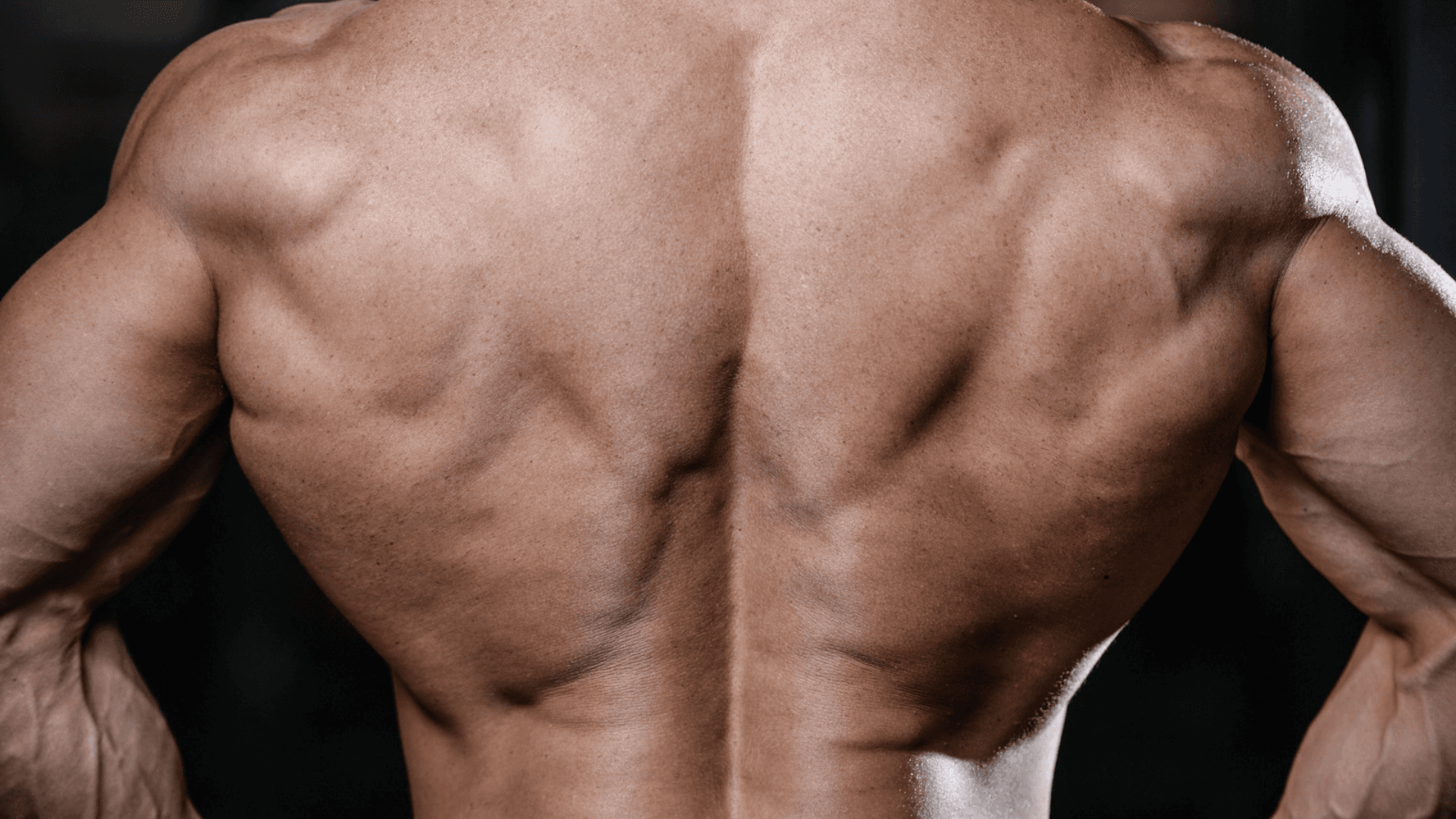
When people start calisthenics, they usually pay attention to the part of the body that is moving the most.
Can I bend my elbows enough to finish the pull-up? Can I straighten my arms in the handstand? Can I get my chest lower in the push-up? Can I support myself on the rings?
Those things matter.
But there is another part of the movement happening underneath all of them: what your shoulder blades are doing.
Your shoulder blades, or scapulae, are not supposed to stay fixed while your arms move.
They slide, rotate, tilt, elevate, depress, protract, and retract depending on what the exercise requires.
That matters in almost every upper-body calisthenics skill.
A pull-up needs a different scapular action from a handstand. A push-up needs a different position from a ring support. A passive hang looks different from an active hang.
The goal is not to find one “correct” shoulder-blade position and use it everywhere.
Scapular control in calisthenics means being able to move and position the shoulder blades appropriately for the task.
What Are the Scapulae?
The scapulae are your shoulder blades.
They sit on the back of the rib cage and form an important part of the shoulder complex. Your upper arm bone connects with the scapula at the shoulder joint, and the scapula also connects to the collarbone.
When your arm moves, the shoulder blade moves too.
That relationship matters because the shoulder is not just one ball-and-socket joint doing all of the work.
The scapula changes position on the rib cage as you reach overhead, push away from the floor, pull yourself toward a bar, or stabilize on rings.
A 2025 systematic review of scapular kinematics found that in healthy shoulders, the scapula begins moving from the start of arm elevation rather than waiting until the arm reaches a certain point. As the arm travels overhead, the scapula generally rotates upward and changes tilt and rotation as part of the movement.
In plain language:
Your shoulder blade is supposed to move when your arm moves.
The Four Scapular Movements You Will Hear Most in Calisthenics
The scapula actually moves in several dimensions, but four coaching terms come up constantly in calisthenics.
Understanding them makes a lot of exercises easier to learn.
Elevation: The Shoulder Blades Move Up
Elevation means the scapulae move upward toward your ears.
Think about shrugging your shoulders.
That is scapular elevation.
People sometimes hear “keep your shoulders away from your ears” so often that they assume elevation is always wrong.
It is not.
In an overhead position such as a handstand, the shoulder blades need to rotate and move in a way that supports the arms overhead. What coaches often describe as “pushing tall” includes active shoulder elevation.
You are not relaxing the shoulders toward the ears.
You are actively pressing the floor away and creating a strong overhead position.
That is very different from collapsing through the shoulders.
Depression: The Shoulder Blades Move Down
Depression means the scapulae move downward.
Imagine standing tall and pulling your shoulders away from your ears.
In calisthenics, scapular depression appears in movements such as:
- Ring supports
- L-sits
- Some phases of pulling
- Parallel-bar support work
If you are holding yourself above the rings, you do not want your shoulders simply collapsing upward toward your ears.
You need enough force to support the body and organize the shoulder girdle.
But depression is not the position you should force into every exercise.
Protraction: The Shoulder Blades Move Around the Rib Cage
Protraction means the scapulae move away from the spine and around the rib cage.
A simple way to feel it is to hold your arms in front of you and reach farther forward without bending the elbows.
Your shoulder blades move around your ribs.
This is very important in pushing.
At the top of a push-up, for example, you should be able to continue pushing the floor away so the scapulae can move around the rib cage rather than being permanently pinched together.
Protraction also matters heavily in planche work, where the athlete needs to maintain a strong scapular position while supporting bodyweight through straight arms.
Retraction: The Shoulder Blades Move Toward Each Other
Retraction is the opposite.
The scapulae move toward the spine.
You can feel this when you pull your shoulders back.
Retraction occurs during many pulling movements, although the exact scapular motion changes across the range and depends on the exercise.
Rows provide an easy example.
As you pull your body toward the rings, the shoulder blades can move toward each other as part of the pulling action.
But again, the goal is not to squeeze them together as hard as possible and hold them there for every repetition.
The scapula needs to participate in the movement rather than being locked in place.
Why “Down and Back” Is Not a Universal Shoulder Position
For years, a common fitness cue has been:
“Keep your shoulders down and back.”
Sometimes that cue is useful.
Sometimes it teaches the exact opposite of what the movement needs.
If you are performing an overhead movement, the scapula needs to move to support the arm as it rises.
Research on healthy scapular movement during arm elevation shows that the scapula progressively rotates upward and changes its orientation as the arm moves overhead. (Review)
Trying to hold the shoulder blades permanently depressed and retracted while reaching overhead can interfere with that natural movement.
The same problem appears in pushing.
If you perform every push-up while aggressively pinching the shoulder blades together, you remove part of the scapular motion that belongs in the exercise.
The better question is not:
“Are my shoulder blades down and back?”
It is:
“Are my shoulder blades doing what this movement requires?”
The Scapulae Should Move During a Push-Up
A push-up is not only elbow flexion and extension.
The shoulder blades move on the rib cage as well.
As you lower, the scapulae move differently than they do at the top.
As you press away from the floor, they can protract as the upper back and shoulder girdle organize the finish of the movement.
Research measuring scapular kinematics during traditional push-ups has shown that the scapula changes rotation and tilt throughout the repetition rather than remaining fixed. (Study)
This is why we do not coach a push-up by telling someone to squeeze their shoulder blades together for the whole set.
We want control through the movement.
At the top, that often includes learning to actively push the floor away.
That skill becomes even more relevant later in planche progressions and other straight-arm pushing work.
Pulling Requires Scapular Movement Too
Pull-ups are another place where people focus almost entirely on the elbows.
They think:
“Pull with the arms until the chin gets over the bar.”
But the shoulder blades are part of the movement.
The scapula changes position as the body moves from a hang into the pull.
That is one reason different pull-up techniques can feel so different.
A biomechanical study comparing several pull-up variations found measurable differences in scapular and shoulder-joint motion between techniques. (Study)
You do not need to memorize those kinematics to perform a pull-up.
But it reinforces the larger point:
The scapula is not a passive platform while the arms do all the work.
It is part of the pull.
Passive Hang vs Active Hang
Hanging gives beginners a very clear way to learn scapular control.
In a relaxed passive hang, the shoulders are allowed to elevate and the body hangs more passively from the arms.
That position can be useful when it is appropriate for the person.
Now, without bending the elbows, you can begin pulling the body slightly upward by changing the position of the shoulder blades.
That is often called an active hang or scapular pull.
The difference may only be a few centimeters.
But it teaches something important:
You can move the shoulder girdle without turning the exercise into an elbow curl.
That awareness becomes useful in pull-ups, muscle-ups, lever work, and ring training.
Why Scapular Pulls Are Useful
Scapular pulls are not a replacement for pull-ups.
They train one part of the movement.
You hang from the bar with straight arms and practice moving the shoulder blades while maintaining elbow extension.
For a beginner, this can help separate two actions that initially feel like one thing:
- Moving the shoulder girdle
- Bending the elbows
That distinction becomes much more important in advanced calisthenics.
A front lever, for example, requires substantial shoulder and scapular control while the elbows remain straight.
If every pulling movement you know begins by bending the elbows immediately, straight-arm strength can feel completely unfamiliar.
Scapular work helps introduce that idea at a much easier level.
Ring Supports Need a Different Scapular Strategy
Now compare a hang with a ring support.
In the hang, your body is below your hands.
In a ring support, your body is above them.
The shoulder girdle now has to organize itself to support your bodyweight while the elbows remain extended.
A basic ring support asks for:
- Straight-arm strength
- Shoulder stability
- Scapular control
- Trunk control
- Grip
- Ring control
You may hear a coach cue you to “push tall” or keep the shoulders from collapsing.
That is different from what happens in a relaxed hang.
Same shoulder blades.
Different task.
Different position.
This is why scapular control cannot be reduced to one cue.
Handstands Need Active Elevation
Handstands are another great example.
If you take the “shoulders down” cue from a ring support and apply it literally to a handstand, you create a problem.
In a handstand, we generally want the athlete actively pushing the floor away and creating as much useful overhead length as their mobility and control allow.
That requires the shoulder blades to participate in the overhead position.
Research on arm elevation consistently shows scapular upward rotation as the arm travels overhead. (Review)
For the athlete, the coaching cue is much simpler:
Push tall.
That does not mean shrug loosely.
It means create an active overhead position and keep pressing through the floor.
The shoulder blades are not “down and back.”
They are doing the job the handstand requires.
Planche Work Uses Protraction Differently
Planche progressions introduce another scapular demand.
Now your hands are on the floor, the elbows stay straight, and your center of mass begins moving forward.
To maintain the position, you need strong straight-arm pushing and active scapular protraction.
This is one reason planche training feels very different from a bench press or regular push-up.
The shoulder blades need to be controlled in a position that many adults have never intentionally trained under significant load.
A planche lean can begin teaching this long before someone is strong enough for a tuck planche.
Again, the progression is not only about the arms.
The scapular position is part of the skill.
Front Lever Work Has Its Own Scapular Demands
A front lever is the pulling-side example.
The athlete hangs below the bar or rings with straight elbows while holding the body horizontally.
That requires much more than strong lats.
The shoulder girdle has to maintain a very specific relationship while the trunk and hips hold the body line.
This is why someone can have excellent pull-ups and still struggle with even a basic front-lever progression.
Bent-arm pulling strength helps.
But straight-arm scapular control is a different demand.
That demand has to be trained.
The Common Mistake: Chasing the Arm Movement
This is one of the easiest things to see when coaching beginners.
The person knows what the final movement should look like.
So they chase the visible part of it.
During a pull-up, they focus on bending the elbows.
During a dip, they focus on getting lower.
During a handstand, they focus on kicking the legs overhead.
During a push-up, they focus on getting the chest to the floor.
But the shoulder position starts disappearing.
The pull-up turns into an elbow-dominant struggle.
The ring support collapses into the shoulders.
The handstand loses the overhead push.
The push-up finishes without controlling the scapula at the top.
The person technically moved from point A to point B.
But the movement they are practicing is not the one we want to build.
Progress is not just completing the arm movement. It is maintaining the positions that make the movement useful.
Why Control Matters Before Harder Progressions
Calisthenics progressions increase load in several ways.
You may:
- Use more bodyweight
- Increase leverage
- Add range
- Reduce assistance
- Move to unstable equipment
- Add external load
If the basic scapular position is already disappearing in the easier version, the harder version usually magnifies the problem.
Imagine someone whose shoulders collapse during a basic parallel-bar support.
Moving directly to rings will not make the position easier to control.
Or someone who cannot actively push tall in a wall handstand.
Adding freestanding balance practice may introduce another problem before the overhead position is stable.
That is why coaches care about control before progression.
Not because every repetition has to look perfect.
Because the next exercise should build on something you can already organize.
Scapular Awareness Comes Before Scapular Strength
For many beginners, the first problem is not that the muscles around the shoulder blade are dramatically weak.
The person simply does not know how to move the scapula deliberately.
Ask them to protract without bending the elbows and nothing happens.
Ask them to perform a scapular pull and they immediately turn it into a chin-up.
Ask them to push tall in a handstand and they arch the back instead.
This is normal.
Most adults have never been asked to control the shoulder blades independently.
So the first stage can be surprisingly simple:
- Feel protraction and retraction
- Feel elevation and depression
- Move the scapula while keeping the elbows straight
- Recognize the difference between a passive and active hang
- Learn what “push tall” feels like
Then we load those positions.
How Coaches Teach Scapular Control Progressively
We do not start by giving someone a long anatomy lecture.
We give them movements where the scapular action is easy to feel.
Scapular push-ups
Keep the elbows straight and allow the shoulder blades to move around the rib cage.
This teaches the difference between moving the scapula and performing a normal push-up.
Scapular pulls
Hang from a bar and move the shoulder girdle without bending the elbows.
This introduces active hanging and straight-arm pulling control.
Support holds
Use parallel bars, boxes, or rings to practice supporting bodyweight while organizing the shoulders.
Wall handstands
Learn to actively push through the floor and maintain the overhead shoulder position with the wall providing balance assistance.
Ring rows
Use a scalable pulling exercise where the coach can cue both the arm movement and the shoulder-blade movement.
The goal is not to master isolated scapular drills forever.
The drills teach awareness.
Then that awareness has to transfer into real strength exercises.
Scapular Drills Are Not the Final Goal
Scapular push-ups are useful.
Scapular pulls are useful.
But doing hundreds of them is not the end goal.
You eventually need to use scapular control inside:
- Full push-ups
- Pull-ups
- Dips
- Ring work
- Handstands
- Levers
- Pressing
- Rows
The isolated drill is valuable because it makes a difficult concept easier to feel.
Then we integrate it.
That is the same way we approach many fundamentals at MOVE.
Learn the piece.
Then use the piece inside the movement.
Scapular Control Changes With Load
The shoulder blades do not necessarily move exactly the same way at every intensity.
External load can change scapular kinematics.
A 2024 study measuring shoulder elevation with different handheld loads found that increasing external load altered scapular elevation and upward rotation during the task. (Study)
That matters practically because someone may control a position very well with an easy progression and lose it when the load becomes too high.
This is not unusual.
It is information.
If the scapular position disappears when we increase leverage or resistance, we may need to:
- Reduce the difficulty
- Build more volume at the previous level
- Add targeted strength
- Adjust the range
- Use assistance
- Revisit the position
The solution is not automatically more cueing.
Sometimes the exercise is simply too hard right now.
Fatigue Changes Scapular Control Too
The same thing happens within a set.
The first few repetitions may be clean.
Then fatigue builds.
The shoulders start moving differently.
A study that fatigued scapular musculature during a push-up-plus task found measurable changes in scapular kinematics afterward. (Study)
We do not need to turn that into an injury prediction.
The useful coaching takeaway is simpler:
Fatigue can change movement quality.
That is why the last five ugly repetitions are not automatically more valuable than stopping the set while the target position is still there.
This connects directly with how MOVE approaches training intensity and max-effort work.
There Is No One “Perfect” Scapular Position
This is important because scapular coaching can become too rigid.
There is normal variation between people.
There is also normal variation between tasks.
Research on healthy and symptomatic shoulders shows considerable variability in scapular position and movement. (Systematic review)
That is one reason we avoid treating one visual position as universally correct.
We care about whether the person can:
- Access the movement required
- Control the position under load
- Perform the exercise consistently
- Progress without losing the basic task
- Adjust when the movement changes
The scapula is supposed to move.
Control does not mean freezing it.
Scapular Control and Straight-Arm Strength
Straight-arm skills make scapular control especially obvious.
When the elbow stays locked, you cannot rely on elbow flexion or extension to create the movement.
The shoulder girdle has to do more of the work.
That is why exercises such as:
- Planche leans
- Scapular pulls
- Ring supports
- Lever progressions
- Handstand pushes through the shoulders
can feel so unfamiliar even to someone who is already strong.
This is also why our article on isometric training in calisthenics connects closely with scapular control.
Many advanced calisthenics skills ask you to maintain a scapular position isometrically while the rest of the body is under significant load.
You have to learn the position before you can load it heavily.
Why Strong Lifters Can Still Struggle With Scapular Control
Someone can arrive at MOVE with a strong bench press, overhead press, lat pulldown, and row.
That strength is useful.
They already have force-producing capacity.
But bodyweight skills may ask them to use the shoulder blades differently.
Machines often constrain the movement path.
Bench-supported rows reduce some of the need to organize the trunk and shoulder girdle.
A handstand asks for overhead scapular control while the body is inverted.
Rings ask you to stabilize your body and the equipment at the same time.
A lever asks for straight-arm control under a long moment arm.
That does not mean traditional lifting failed them.
It means the new task requires a new skill.
The strength transfers.
The control still has to be learned.
Why MOVE Starts With Fundamentals
This is exactly why scapular awareness shows up early in MOVE training.
Every new training member at MOVE begins with Fundamentals.
Fundamentals is currently a five-session private coaching series plus two Stretch Series classes. It is designed to establish bodyweight control, joint mobility, movement patterns, and positional awareness before members move into regular group classes or personal training.
The sessions include:
- Lower-body mechanics
- Upper-body pressing
- Rotator cuff work, hanging, and pulling
- Spine, core, and introductory acrobatics
- Barbell technique, plyometrics, and hip flexibility
That upper-body work is not only about asking how many repetitions you can perform.
We also want to see:
- Can you support your bodyweight?
- Can you hang comfortably?
- Can you move the scapula without immediately bending the elbows?
- Can you organize the shoulder during pushing and pulling?
- Can you reach overhead with useful control?
- What changes when the exercise gets harder?
MOVE describes Fundamentals as the starting point for every new training member, and the curriculum is adjusted to the member's history, mobility, and goals. (MOVE Fundamentals)
You do not need to understand scapular mechanics before you arrive.
That is part of what the coaching is for.
What Happens After Fundamentals?
Once the basic positions make sense, they get integrated into the rest of training.
MOVE's group classes combine gymnastics-inspired strength work, weight training, calisthenics, and flexibility, with exercises scaled to each member's level.
The scapular work is no longer a separate lesson.
It becomes part of:
- Pull-ups
- Push-ups
- Rings
- Handstands
- Rows
- Straight-arm strength
- Overhead work
- Skill progressions
That is where scapular control becomes useful.
You are no longer thinking about moving your shoulder blades for the sake of moving your shoulder blades.
You are using them to perform stronger, cleaner movement.
The Goal Is Not Perfect Shoulder Blades
You do not need to watch your scapula in a mirror during every repetition.
You do not need to memorize every anatomical movement.
And you do not need to hold your shoulders in one “perfect” position all day.
The goal is much more practical.
You should be able to:
- Let the scapula move when the task requires movement
- Create stability when the task requires stability
- Push through the shoulder blades during pushing
- Organize them during pulling
- Elevate actively overhead
- Support yourself without collapsing
- Maintain the position as the exercise becomes harder
That is scapular control.
Your shoulder blades are not supposed to stay still. They are supposed to know what to do.
Frequently Asked Questions
What is scapular control in calisthenics?
Scapular control is the ability to move and position the shoulder blades appropriately for the exercise you are performing. That includes protraction, retraction, elevation, depression, and the rotational movements that occur as the arms move overhead.
What is scapular protraction?
Protraction is when the shoulder blades move away from the spine and around the rib cage. You can feel it when you push the floor away at the top of a push-up. It is especially important in pushing and planche-style movements.
What is scapular retraction?
Retraction is when the shoulder blades move toward the spine. It occurs during many pulling movements, including rows, although the scapula should still be allowed to move naturally through the exercise rather than being held maximally retracted the entire time.
What is scapular depression?
Depression means the shoulder blades move downward. It is important in support positions such as ring supports and L-sits, but it is not a position that should be forced during every upper-body movement.
Should my shoulders always be down and back?
No. The scapulae need to change position depending on the task. Overhead movements require scapular upward rotation and active positioning, pushing commonly involves protraction, and support work may require more depression. “Down and back” is a situational cue, not a universal rule.
What is the difference between an active hang and a passive hang?
In a passive hang, the body hangs more relaxed from the arms and the shoulders are allowed to elevate. In an active hang, you use the shoulder girdle to create tension and slightly change the scapular position while keeping the elbows straight.
Do scapular pull-ups help build pull-ups?
They can help teach active hanging and scapular movement with straight elbows, but they are only one part of pull-up development. Full pulling strength still needs rows, assisted pull-ups, chin-ups, or other progressive pulling exercises.
Why do my shoulders shake on rings?
Rings add instability, so your shoulders, arms, trunk, and grip have to make constant small corrections. This often feels difficult even for strong people who are new to rings. Support strength and control improve with progressive exposure.
Do I need separate scapular exercises forever?
No. Isolated drills such as scapular pulls and scapular push-ups are useful for learning awareness and control. Over time, that control should be integrated into full exercises such as pull-ups, push-ups, dips, handstands, and ring work.
Want to Build Better Bodyweight Control?
If pull-ups, handstands, rings, or calisthenics feel harder than your general strength would suggest, the missing piece may not simply be bigger muscles.
Sometimes you need better control of the positions those skills require.
At MOVE, Fundamentals gives us a coached starting point to see how your strength, mobility, scapular control, and bodyweight skills fit together.
Book a free one-on-one intro with a MOVE coach and we will help you find the right place to start.
Research References
- Scapular kinematics variability in individuals with and without rotator cuff-related shoulder pain: A systematic review with multilevel meta-regression. 2025.
- Suprak DN, et al. Scapular kinematics and shoulder elevation in a traditional push-up. Journal of Athletic Training. 2013.
- Prinold JAI, Bull AMJ. Scapula kinematics of pull-up techniques. Journal of Science and Medicine in Sport. 2016.
- Huang CK, et al. Scapular kinematics and muscle activities during pushing tasks. Journal of Occupational Health. 2013.
- Eldridge A, et al. External handheld loads affect scapular elevation and upward rotation during shoulder elevation tasks. International Biomechanics. 2024.
- Scapula kinematics and task specificity: The effect of load direction. Journal of Biomechanics. 2025.
- Scapula kinematic alterations following a modified push-up plus task. 2009.
- Evaluation of the range of motion of scapulothoracic, acromioclavicular and sternoclavicular joints: State of the art. 2023.
- MOVE GST. Fundamentals.
- MOVE GST. Group Classes.
Ready to put this into practice?
Book a free intro with a MOVE GST coach — they'll build a plan around you, not a template.
Book Your Free Intro