Every morning at 6:00 a.m., Alex walks into the gym, swipes their key tag, and heads straight for the treadmill. After 20 minutes of running and another 30 minutes on machines — leg press, lat pulldown, chest fly — Alex finishes the session, checks off the workout, and leaves. It’s consistent. It’s safe. But lately, it feels… empty.
Despite showing up five days a week, Alex’s body feels stiff, joints ache more often, and motivation is fading. There’s no excitement, no measurable improvement — just repetition. Something’s missing.
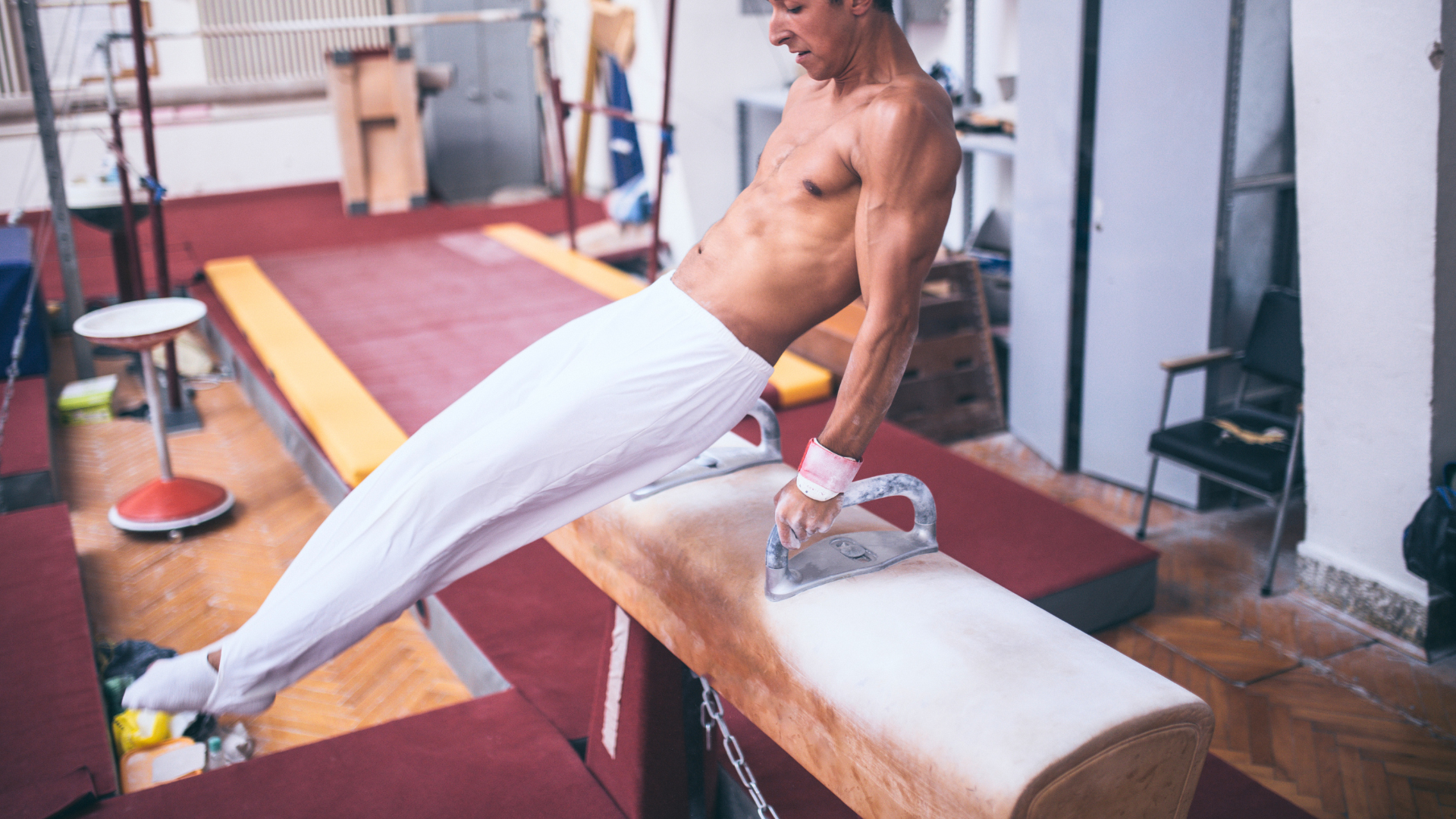
One day, Alex scrolls through Instagram and watches someone their age gracefully transition into a handstand, then lower into a controlled L-sit. Another clip shows a woman performing fluid ring muscle-ups with perfect form. It doesn’t look like exercise — it looks like freedom. Strength and movement expressed through skill, not just sets and reps.
That’s the turning point.
Because the truth is: training shouldn’t just be about burning calories or lifting heavier dumbbells. It should teach your body something. It should sharpen your mind, enhance how you move through life, and unlock physical capabilities you never thought possible.
That’s the promise of skill-based training — and it’s why more and more people are walking away from conventional gym routines and discovering a better way to train: one that transforms your body and your mind.
In this article, we’ll unpack what skill-based training really means, how it compares to linear workouts, and why it’s the foundation of how we train at MOVE.
What is Skill-Based Training?
Skill-based training is more than just a workout — it’s a practice. Unlike linear training, which often focuses on repetitive sets, isolated muscle groups, or cardio machines, skill-based training blends strength, flexibility, coordination, and motor control to build capabilities, not just muscle.
At its core, this method teaches your body to move better — with purpose, intention, and mastery. Whether you’re learning a handstand, a muscle-up, or a deep back bridge, every movement requires both physical and neurological development. You’re not just lifting — you’re solving movement puzzles with your body as the tool.
It’s also inherently progressive. Each skill has regressions and progressions, creating a long-term path for growth. You’re always working toward something measurable, whether that’s holding a handstand for 60 seconds or finally achieving your first strict ring dip.
At MOVE, our approach is rooted in gymnastics, calisthenics, and weight training — three modalities that combine to build a body that is lean, strong, mobile, and durable. You’re not just training muscles — you’re building a system that’s both resilient and responsive.
Skill-based training rewires how you relate to fitness. It shifts the focus from appearance to ability. From counting reps to celebrating breakthroughs. And most importantly, it builds a body that performs — not just one that looks good in the mirror.
Linear Training: Why It’s Failing So Many People
For decades, commercial gyms have sold a single model of fitness: pick a machine, count your sets and reps, increase the weight — rinse and repeat. This is what’s commonly known as linear training. While it’s not inherently bad, it comes with serious limitations, especially when your goals go beyond just burning calories or gaining size.
Linear training isolates muscles, but it rarely improves movement. It’s designed for aesthetics, not function. That means you can build bigger biceps, but still tweak your back picking up a box. You can squat heavy, but still feel stiff and immobile. You can “burn out” in a bootcamp class, but still feel weak climbing stairs or unstable getting off the floor.
Even worse? Linear training often ignores the nervous system. There’s no demand for coordination, precision, or awareness — only effort. As a result, progress plateaus fast, workouts get boring, and people quit. Or worse, they push through pain and get injured.
This model doesn’t build long-term athleticism. It doesn’t teach the body to adapt, recover, or move in multiple planes. It doesn’t build resilience — it builds repetition.
And in a world where people sit more, move less, and carry stress in their bodies, that’s simply not enough.
Skill-based training fixes that. By focusing on how you move — not just how much you lift — you train the body and the brain together. The result? Strength that actually shows up in life.
How Skill-Based Training Transforms the Body
When you train for skill, your body adapts in a completely different way than it does with traditional gym workouts. Instead of isolating muscles on machines, you’re using your body as one integrated unit — building strength that’s not just visible, but useful.
Skill-based training demands control through a full range of motion. Movements like handstands, ring rows, L-sits, and strict pull-ups challenge your joints, tendons, and muscles to work in harmony. Over time, this creates joint integrity, bulletproof connective tissue, and tensile strength — all of which keep you injury-free and resilient.
It also builds the kind of body composition most people are chasing: muscular, athletic, and lean. Not bulky. Not inflamed. Not worn down by chronic cardio or hours of high-rep burnout workouts. With skill training, your body becomes the machine — strong, mobile, and responsive.
Here’s what people often experience after just a few months of training this way:
-
Better posture and spinal alignment
-
Greater shoulder mobility and stability
-
Visible core definition from functional, not aesthetic, training
-
Pain-free knees, hips, and back
-
Balanced muscle development — no more overtraining the “mirror muscles”
This is the kind of training that carries over into everything — from sports performance to playing with your kids, and even to everyday movement like climbing stairs or carrying groceries.
And while linear workouts wear you down, skill-based sessions build you up — physically and neurologically.
The Mental Shift — Building Confidence, Focus & Grit
Skill-based training doesn’t just shape your body — it sharpens your mind.
Each session demands presence. You can’t zone out while balancing on your hands or learning how to move through a ring transition. Skill work requires attention to detail, patience, and intentional practice — and that changes the way you show up, both in and out of the gym.
At MOVE, we’ve seen it happen again and again. Clients who once doubted themselves now approach every session with curiosity and courage. Why? Because every skill is a problem to solve, and every solved problem is a confidence win.
There’s a moment — when someone gets their first handstand hold, or finally achieves their first pull-up — where their whole mindset changes. Suddenly, they’re no longer someone who “can’t.” They’re someone who does.
This process also teaches:
-
Emotional regulation under pressure (especially when learning high-skill movements)
-
Delayed gratification and long-term thinking
-
Improved body awareness, leading to greater self-trust and reduced injury risk
-
Focus that carries over into work, relationships, and life
Traditional gym workouts can become mindless. But skill-based training keeps you engaged, and that mental engagement leads to something powerful: self-belief.
Why We Combine Gymnastics, Calisthenics, and Strength Training
At MOVE, we’ve crafted a hybrid system that merges the best of gymnastics, calisthenics, and traditional strength training — because no single method can develop the complete athlete. Each brings something unique to the table:
-
Gymnastics develops elite-level body control, joint integrity, and proprioception. It forces you to master your own body through space — whether upside down, swinging, or holding static positions.
-
Calisthenics builds true relative strength and a lean, muscular physique using nothing but your body and gravity. It’s efficient, low-impact, and endlessly scalable.
-
Strength training ensures progressive overload, builds maximum force capacity, and fills in the gaps that bodyweight training might miss — especially for lower-body development and injury prevention.
By combining all three, we create a system that’s:
-
Holistic (covers strength, mobility, coordination, and endurance)
-
Sustainable (reduced risk of repetitive stress injuries from doing the same motion over and over)
-
Exciting and goal-oriented (you’re not just lifting for numbers — you’re learning new physical skills)
The synergy between these disciplines keeps your body adaptable, your joints healthy, and your training endlessly motivating. You’re not just exercising — you’re evolving.
Long-Term Impact: Injury Prevention, Adaptability & Lifelong Training
One of the most overlooked benefits of skill-based training is its ability to sustain the body for life — not just for a season.
Traditional linear training, with its repetitive patterns and fixed machines, often wears the joints down over time. It builds muscles, yes, but without teaching the body how to move with control, range, or resilience. This can lead to stiffness, poor motor patterns, and eventually, chronic pain or injury.
Skill-based training flips that narrative.
By practicing movement through diverse ranges, angles, and patterns, you’re teaching the nervous system to adapt. You’re creating resilient joints, stable shoulders, flexible spines, and coordinated muscles that know how to function in the real world — not just under a barbell.
The progression-based nature of gymnastics and calisthenics also encourages smart scaling. You’re never maxing out recklessly. Instead, you’re building step-by-step toward new abilities, while naturally reinforcing mechanics that protect you.
Most importantly, this approach supports lifelong athleticism.
Whether you’re 30 or 60, skill-based training keeps your body playful, strong, and capable. It prioritizes movement literacy over brute force. And that’s exactly what keeps people training — and enjoying training — for decades.
Move with Purpose: Why We Do Things Differently at MOVE
At MOVE, we don’t just train to sweat. We train to move better, think sharper, and live stronger — for the long haul.
Our approach is rooted in skill-based training because we believe movement is a language — one that should be practiced, refined, and celebrated. We blend gymnastics, calisthenics, and strength training not to be different, but because this combination gives people real results: injury-proof bodies, lean and muscular physiques, and minds that stay engaged and inspired.
We’ve seen clients who couldn’t touch their toes go on to master handstands. We’ve seen people who were afraid of back pain learn how to hang, twist, and lift with confidence. And we’ve seen former gym-goers, once stuck in the hamster wheel of linear training, fall in love with movement again.
MOVE isn’t a place to “get it over with.” It’s a place to learn, grow, and enjoy your body again.
Whether you’re looking to build real-world strength, overcome nagging injuries, or finally feel excited about training — we’re here for it. With world-class coaching, smart progressions, and a powerful community behind you.
👉 Ready to experience a smarter way to train? Book your FREE intro session today.